United States warns Haiti’s transitional council not to alter government as gang-fueled violence and a deepening hunger crisis strain the country
• US warned it may act if Haiti’s transitional council alters government • Gangs control large parts of Port-au-Prince; displacement and killings have surged • More than half the population faces food insecurity amid aid shortfalls
US Government: Emphasizes preserving a minimal baseline of security and stability, warning the Transitional Presidential Council against unilateral moves seen as favouring gangs and signalling possible punitive measures. Transitional Council and Some Haitian Officials: Claim a mandate to manage the transition and resist actions that they say could undermine continuity; council leadership publicly opposes initiatives they view as destabilising ahead of the Feb. 7 deadline. Humanitarian Workers and Local Communities: Focus on immediate needs — treating severe malnutrition, coping with displacement and pursuing local agricultural and cooperative solutions — while urging sustained international funding and security conditions that will allow aid and elections to proceed.
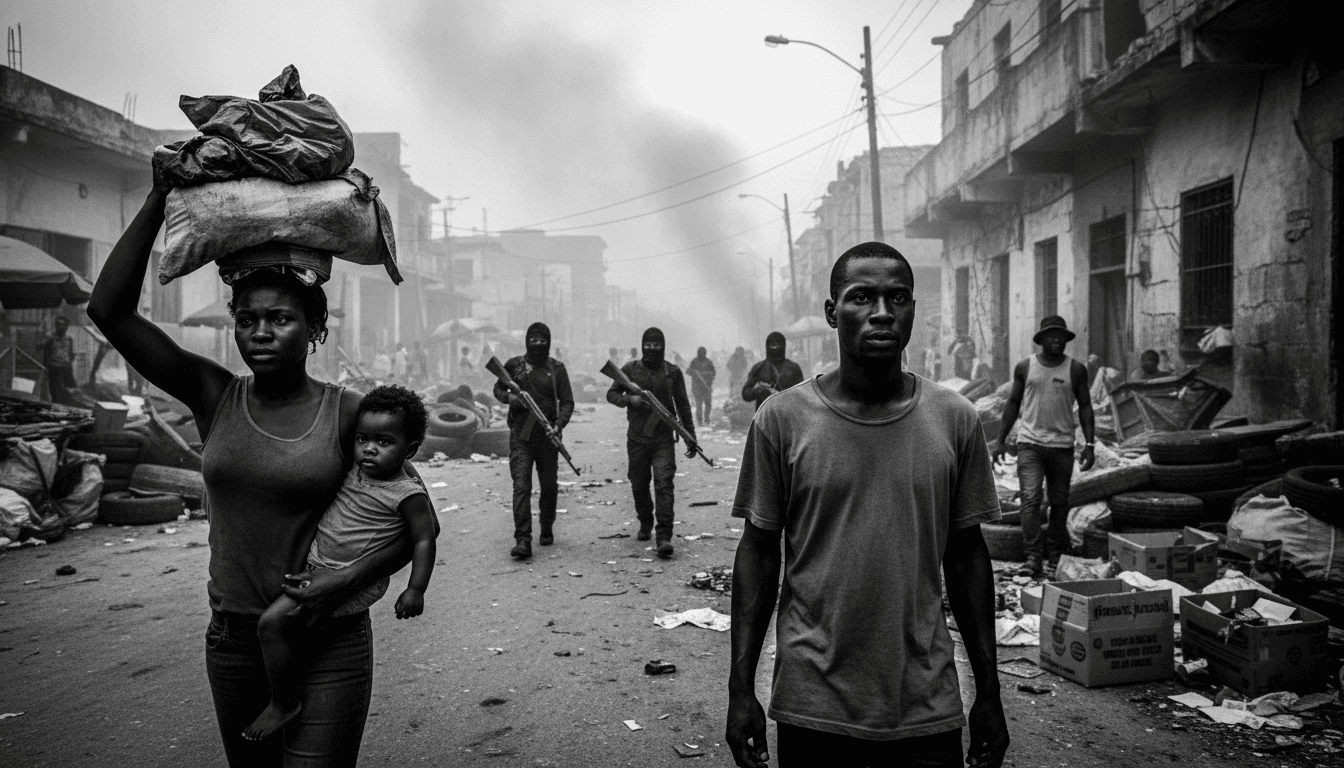
The United States issued a public warning to Haiti’s unelected Transitional Presidential Council, saying it would “consider” taking measures if the council or others sought to change the government in a way the US views as destabilizing, and stressing that such moves would favor gangs and undermine efforts to establish basic security and stability [1][4]. The warning — voiced in statements by the US Embassy and by Deputy Secretary of State Christopher Landau on social media — comes amid reported infighting between some council members and Prime Minister Alix Didier Fils-Aimé, while the council’s mandate is provisionally set to expire on February 7. The council’s leader, Laurent Saint-Cyr, publicly rejected initiatives likely to fuel instability ahead of that deadline [1][4]. At the same time, UN officials told the Security Council that the crisis is reaching a critical phase as powerful gangs expand control across the country [3], with independent reporting documenting that gangs now control roughly 90% of Port-au-Prince, more than 1.4 million people have been displaced, and killings and insecurity have surged — factors that are tightly linked to a severe and growing hunger emergency [2][4]. The humanitarian picture is acute: aid agencies report a record number of people facing food insecurity — The World Food Programme and related analyses put more than half the population at risk (about 5.7 million people) with nearly 1.9 million at emergency levels and projections that acute hunger could worsen by March 2026 — while donor shortfalls have forced cuts to feeding and nutrition programmes, straining hospitals and displacement sites caring for malnourished children and families [2]. Those humanitarian and security dynamics are entwined with Haiti’s political vacuum since the 2021 assassination of President Jovenel Moïse and the creation of the transitional council in April 2024; the council has been criticised for elite membership, missed electoral benchmarks and delays to planned voting (the first of a tiered process was postponed, with broader timelines moved back), complicating efforts to restore elected governance [1][4]. The UN has linked the governance vacuum to worsening violence and signalled plans to bolster the multinational security support mission later in the year, underscoring international concern even as local actors pursue community-based, “homegrown” coping and agricultural initiatives to blunt hunger [3][4][2]. The convergence of a stern US diplomatic warning, UN alarm at the country’s trajectory, and steep humanitarian needs highlights a narrow policy window: international and Haitian actors face pressure to stabilise security, restore credible electoral processes and plug funding gaps for life-saving assistance, while avoiding steps that could further politicise or militarise external involvement. How the Transitional Presidential Council responds ahead of its Feb. 7 expiry, whether elections and protection of civilians can be advanced, and whether donors step up funding will shape whether the current mix of gang dominance, displacement and hunger deepens or eases in the coming months [1][2][3][4].