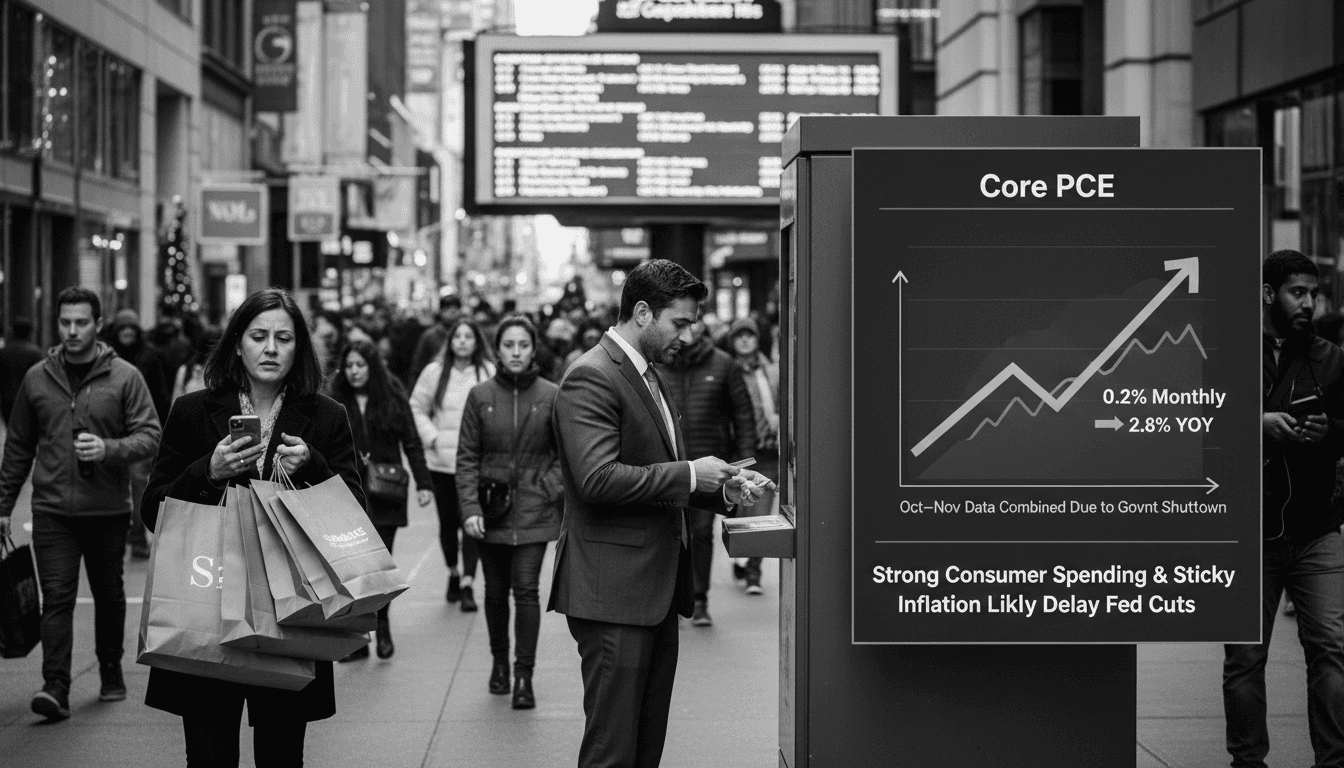
November PCE data show sticky inflation and robust spending, keeping the Fed likely to hold rates next week.
• Core PCE rose 0.2% monthly and 2.8% year‑over‑year • Data combined Oct–Nov because of a government shutdown • Strong consumer spending and sticky inflation likely delay Fed cuts
Federal Reserve/Policymaker view: Data showing inflation still above 2% and persistent services inflation argues for caution and supports holding rates steady in the near term. Market and some economists' view: Futures and many analysts see a high probability of no rate move next week and note that incomplete or delayed data make the picture uncertain until December figures are incorporated. Consumer/economic view: Consumers continued to spend at a healthy pace, supporting growth, but slow wage/after‑tax income gains and a lower savings rate raise questions about the sustainability of spending and the path of inflation.
The Commerce Department’s Personal Consumption Expenditures (PCE) gauge — the Federal Reserve’s preferred inflation measure — rose 0.2% month‑over‑month and 2.8% year‑over‑year in the latest report, with core PCE (excluding food and energy) matching that 2.8% annual pace; the release combined October and November data because of a recent government shutdown. [1][2][3] The report also showed continued consumer strength: BEA and other outlets highlight solid consumption, with real personal consumption measures increasing (reported as roughly 0.3% in some datasets) while other summaries note a 0.5% monthly rise in consumer spending — a difference tied to whether figures are measured in nominal or inflation‑adjusted terms and which month(s) are being referenced. Data limitations from the shutdown mean portions of October were estimated or averaged from surrounding months, and several economists warned the reading is “stale” until December CPI/PPI and more complete BEA breakdowns are available; some analysts expect core PCE to edge toward 3.0% once December is incorporated. [1][2][3] Taken together, the PCE outcome — still above the Fed’s 2% target and accompanied by resilient consumption and modest monthly gains — reinforces market and policymaker expectations that the Fed will keep its policy rate unchanged at the upcoming meeting rather than begin cuts, while underscoring that uncertainty from delayed data will weigh on near‑term rate guidance. [1][2][3]
Controversy
The sources report different spending magnitudes: Barron's and Yahoo reference a roughly 0.3% rise in real personal consumption, while AP reports consumer spending climbed 0.5% month‑over‑month; this reflects differences between nominal vs. inflation‑adjusted (real) measures and the way combined or estimated months were reported amid the shutdown. [1][3]