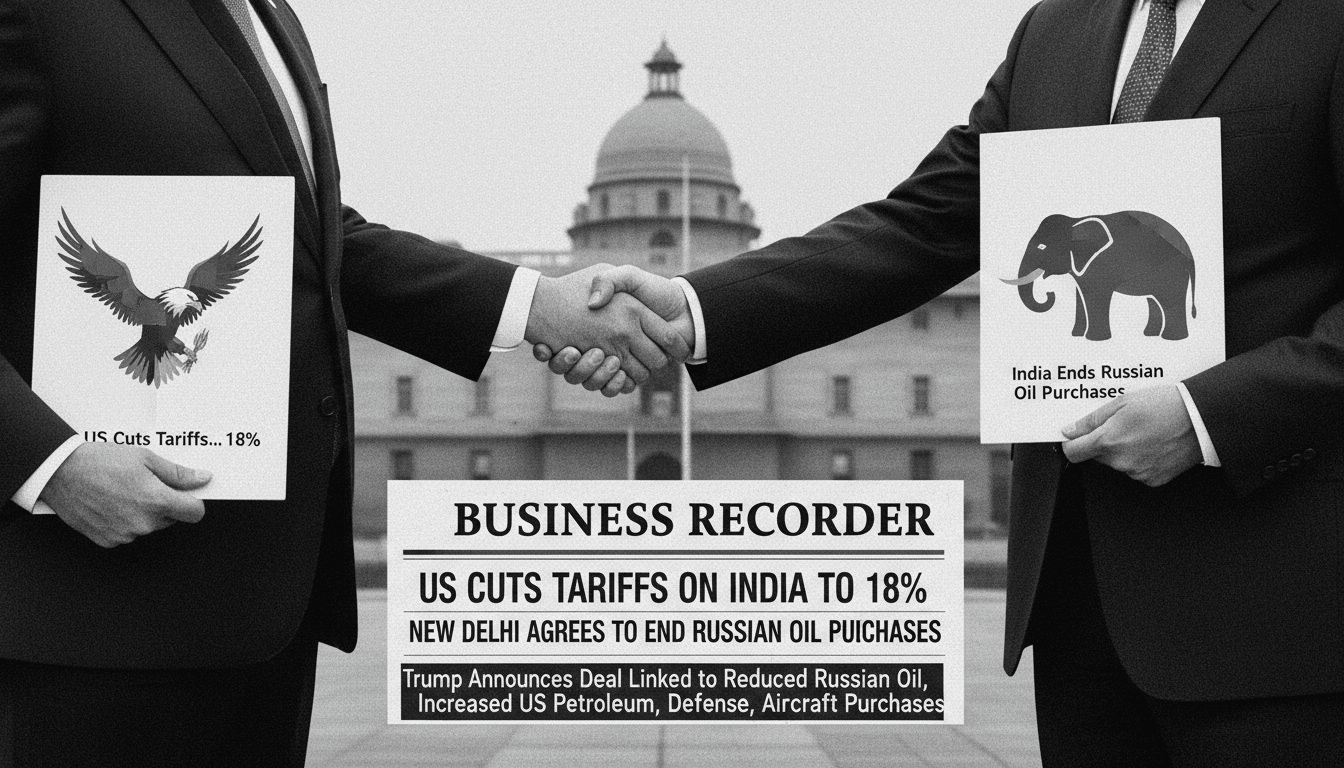
Trump announces tariff cut to 18% as India pledges large U.S. purchases and to curb Russian oil buys
• Trump announced U.S. tariffs on Indian goods would be cut to 18% • India reportedly committed to buy U.S. petroleum, defence gear and aircraft • Deal framed as linked to India reducing purchases of Russian oil
U.S. administration: Presents the move as a diplomatic and economic win — a tariff de‑escalation tied to India buying more American goods and cutting Russian oil purchases. Indian government / officials: Described commitments to buy U.S. products across sectors but framed the agreement as the first tranche, with further, detailed negotiations to follow and no immediate full confirmation published on every claimed concession. Analysts and markets: Markets reacted positively to tariff relief, but analysts cautioned that the announcement may be a tariff de‑escalation rather than a comprehensive trade treaty and flagged logistical, pricing and energy‑security challenges if India is to pivot away from discounted Russian oil.
U.S. President Donald Trump announced a trade understanding with India that he said reduces U.S. tariffs on Indian goods to 18 percent, while a White House official said Washington would rescind a punitive duty that had been applied on top of a reciprocal levy; the package also includes Indian commitments to buy large volumes of U.S. products, including petroleum, defence equipment and aircraft. An Indian official told Reuters the commitment covers sectors such as pharmaceuticals, telecom, defence, petroleum and aircraft and will be implemented over years [1]. Media reporting and the White House description framed the tariff change as removing a punitive 25% duty that had been stacked on a 25% reciprocal tariff (effectively 50%), and lowering the reciprocal tariff to 18% [2][3]. The announcement follows months of escalating trade pressure: duties were doubled last August and markets in India were negatively affected, with reports saying the tariffs had made India among the worst-performing emerging markets in 2025; the news of the deal lifted investor sentiment and saw Indian stocks and ETFs rally on the announcement [2][3]. The deal is presented by Washington as tied to India scaling back purchases of discounted Russian oil; reporting notes India has already begun to reduce Russian crude imports (around 1.2 million barrels per day in January, with projections falling in subsequent months) and that the purchase commitments could include U.S. energy and potentially Venezuelan oil as replacements [2][3][1]. Observers and officials characterized the announcement as an initial tranche rather than a comprehensive treaty: an unnamed Indian official described further, broader negotiations to follow and experts warned the headline tariff change may be a de‑escalation of duties rather than a full trade agreement, with practical, timing and price issues (especially for energy supplies) remaining to be worked out [1][3]. Markets reacted positively in the short term, but analysts cautioned on implementation complexity and on whether India will immediately halt all Russian purchases or phase changes over time.
Controversy
There is a discrepancy in how the tariff change is framed: Trump's social post referenced lowering a reciprocal tariff from 25% to 18%, while reporting and a White House official described rescinding an added punitive 25% duty that had been stacked on top of a 25% reciprocal tariff (effectively 50% to 18%). This difference in framing appears in reporting and official statements [3][2].