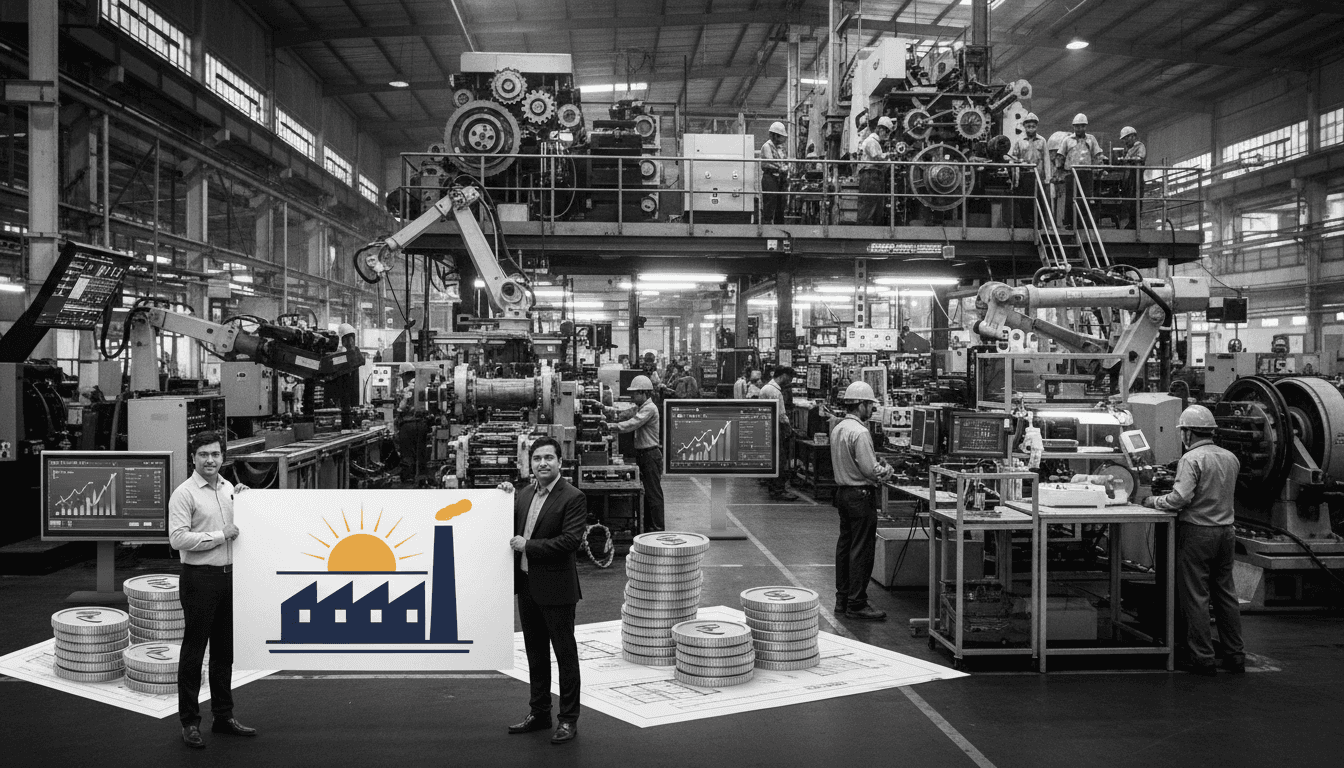
India's 2026 budget prioritises manufacturing and semiconductors while aiming to keep fiscal discipline.
• Budget prioritises manufacturing across seven strategic sectors • Capital expenditure raised to ~12.2 trillion rupees; deficit target ~4.4% of GDP • Semiconductor push focuses on assembly/testing; advanced fabs remain a longer-term goal
Government/Proponents: Present the budget as a strategic, calibrated push to build manufacturing capability, invest in infrastructure and preserve fiscal stability to attract steady long-term growth. Markets/Investors: Some investors and market actors reacted negatively, signalling they had hoped for bolder reforms or incentives to unlock higher private and foreign investment quickly. Industry/Analysts: Tech and manufacturing specialists welcome targeted support (especially for semiconductors and biopharma) but warn that achieving self-reliance and export ambitions will require more time, technology partnerships, and private-capital mobilisation.
India's 2026 Union Budget puts a clear emphasis on scaling up manufacturing across seven strategic sectors — including biopharma, semiconductors, electronics components and rare-earth processing — with specific allocations such as 100 billion rupees for biopharma, 100 billion rupees for container manufacturing and 50 billion rupees for semiconductor and display manufacturing; the budget also raises capital expenditure to about 12.2 trillion rupees and the overall package was described as roughly a US$630 billion allocation. [2] At the same time the government signalled fiscal restraint: tax cuts are expected to reduce revenue by about 1.5 trillion rupees, the fiscal deficit target remains around 4.4% of GDP and officials and reporters noted there is limited room to expand spending further — a framing that the budget pairs with promises of “next-generation” reforms to spur private investment. Market reaction reflected investor disappointment at the lack of bolder structural measures and higher transaction taxes, with equities suffering one of their worst budget-day drops in years and foreign investors selling heavily in recent months. [1] The plan aligns with longer-term industrial ambitions but also faces practical constraints. Analysts and industry sources note India is already strong in chip design and engineering, and the near-term semiconductor strategy emphasises assembly, testing and packaging (and selective fabrication moves) rather than immediate production of the most advanced nodes; pilot facilities such as Kaynes Semicon have begun commercial operations, but meeting ambitious self-reliance and export goals will require sustained private-sector investment, technology transfer and favourable global trade access. [3][2][1]