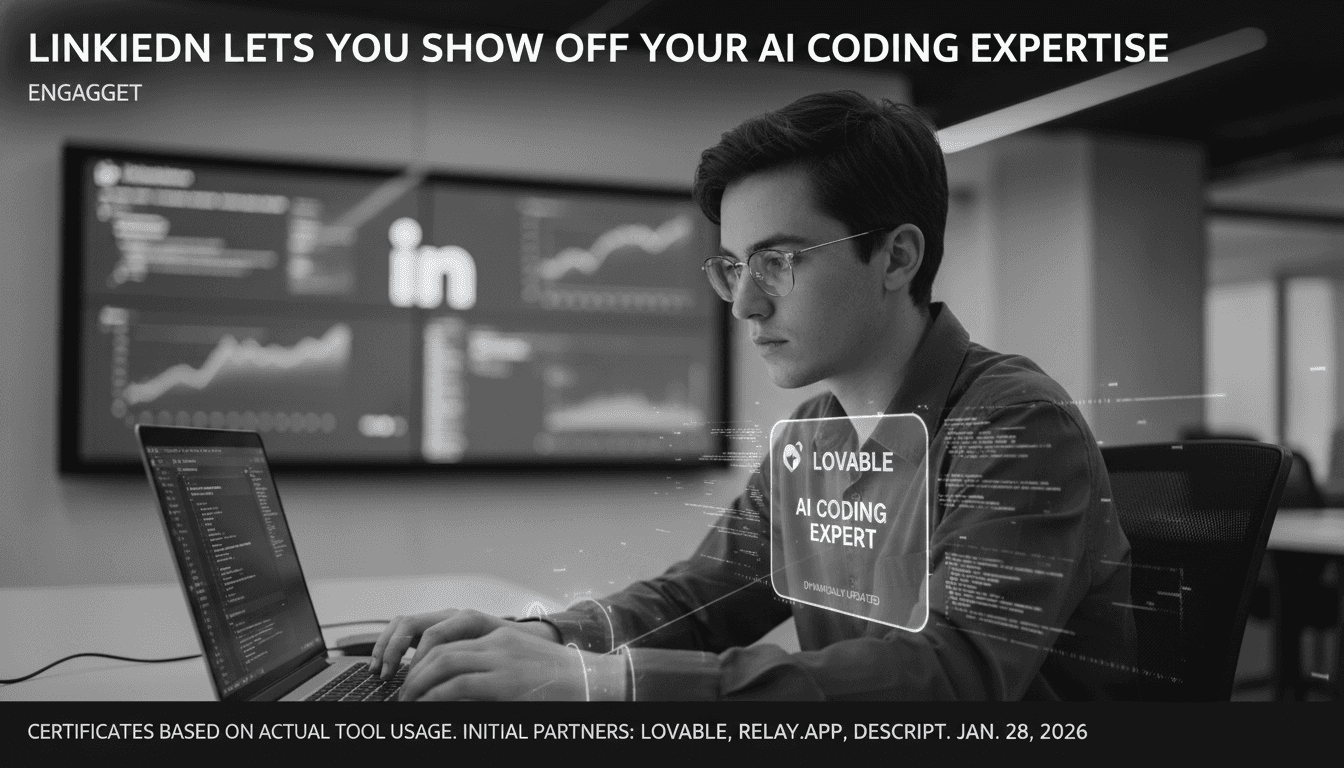
LinkedIn will let users display dynamic, partner‑verified AI skill certificates from tools like Replit and Lovable on profiles.
• LinkedIn launched partner‑verified AI skill certificates on Jan. 28, 2026 • Initial partners include Lovable, Relay.app, Replit and Descript; GitHub and Zapier coming • Certificates are based on actual tool usage and dynamically update over time
Platform / recruiters: Views the feature as a practical "skills‑first" signal that helps surface demonstrable AI/tool fluency and reduce skills inflation. Users / workers: Some will welcome a way to prove hands‑on ability, while others may worry about being evaluated by third‑party product metrics, potential gatekeeping, or how badges interact with job security amid AI‑driven role changes. Policy / industry observers: See potential benefits for hiring efficiency but flag needs for standardization, transparency, and safeguards around measurement bias, data sharing, and how differing partner scales will be interpreted.
LinkedIn on Jan. 28 launched a new verified‑skills feature that lets users display proficiency badges tied to specific AI tools on their profiles; initial partners include Lovable, Relay.app, Replit and Descript, with planned additions such as GitHub, Zapier and Gamma. [1][3][2] Rather than relying on one‑time exams or self‑reported claims, partner companies will assess proficiency using product usage patterns, outcomes and in some cases their own AI systems, then supply a certificate LinkedIn ingests and displays; those certifications are intended to update dynamically as a user’s demonstrated skill changes. [1][3][2] The move is positioned as part of a broader “skills‑first” shift intended to address what platforms and researchers call a skills mismatch in hiring, giving recruiters a more verifiable signal of practical capability than résumé items like degrees or freeform skills lists. [1][3] The rollout highlights a new, more granular category of AI‑related credentials—often described in media as “vibe coding”—with partners using different measurement systems (e.g., Lovable’s Bronze/Silver labels, Replit’s numerical levels, Relay’s intermediate labels), and LinkedIn executives say the aim is to complement, not replace, other hiring signals. [2][3] Coverage also notes possible tensions: the feature arrives while AI tools are reshaping roles and prompting layoffs in some areas, which may make workers attentive to how such badges affect hiring and career risk. [2] Implications include potentially faster discovery of demonstrable AI tool fluency for recruiters and a shift in how digital professional credentials are validated, since the assessment logic lives with third‑party toolmakers and is ingested by LinkedIn. [1][3] That raises follow‑on questions flagged across coverage about standardization, transparency of assessment methods, privacy and how differences among partner measurements will be interpreted by employers and automated hiring systems—issues LinkedIn and partners will need to address as the program expands. [1][2][3]