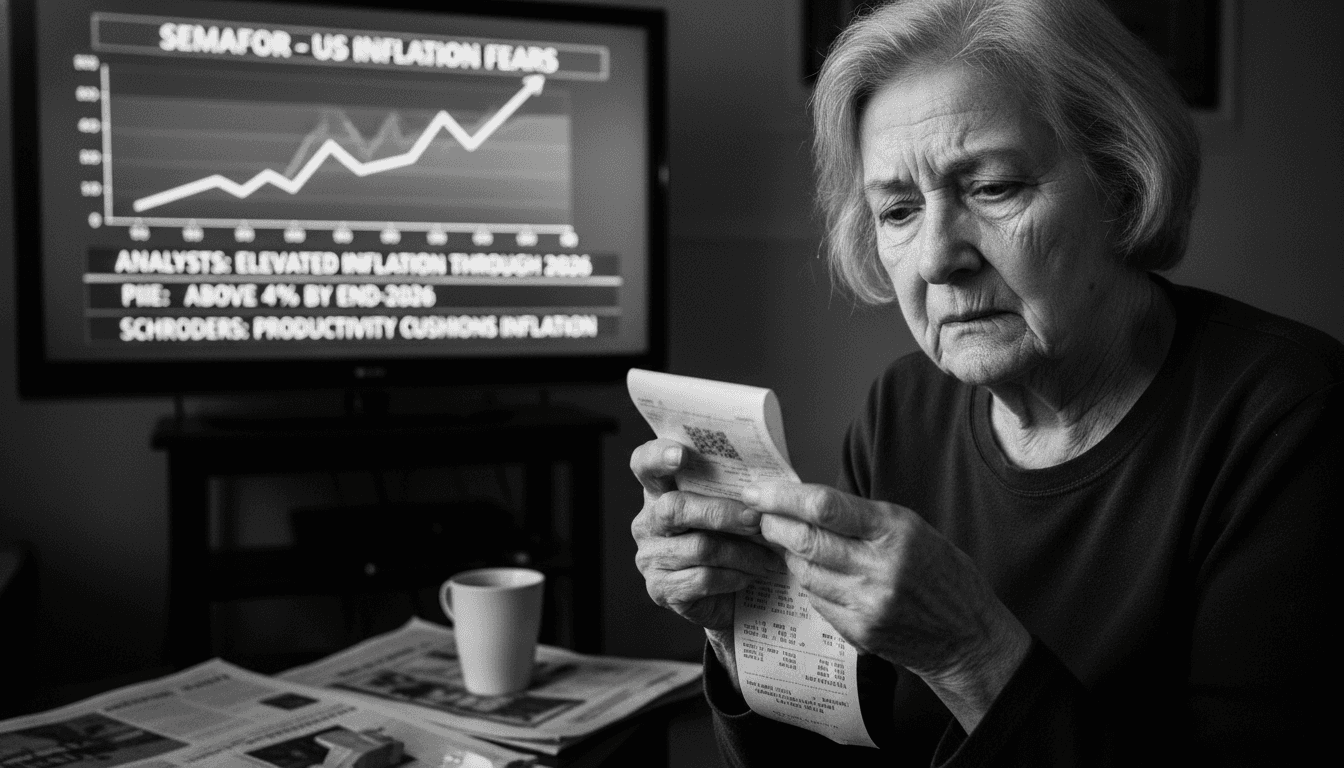
Analysts diverge on whether inflation will stay elevated, rise above 4%, or be tempered by productivity gains in 2026.
• Some analysts expect inflation to remain elevated through 2026 • PIIE warns factors could push inflation above 4% by end-2026 • Schroders highlights productivity as a dampener on inflation
Hawkish / Upside-risk: Some economists warn that delayed tariff pass-through, fiscal expansion, tighter labor supply, and looser financial conditions could combine to push inflation materially higher in 2026. Practical / Moderating: Other market commentators expect inflation to stay elevated — hurting lower-income households — but see policy responses (tariff adjustments, targeted fiscal measures, Fed rate moves) producing partial relief in areas such as housing. Optimistic / Productivity-focused: Asset managers emphasize rising productivity and scenario-based moderation, arguing these forces (together with market positioning) could restrain broad inflationary pressures and limit tail-risk outcomes.
Several recent commentaries paint different pictures for US inflation in 2026. A consumer-facing piece relaying TIAA Wealth's Niladri Mukherjee warns that inflation is likely to remain elevated through 2026, driven in part by tariff pass-through to consumers and ongoing economic activity, while noting potential policy steps (tariff stabilisation and possible Federal Reserve rate cuts) that could provide pockets of relief such as improved housing affordability. [1] A more hawkish assessment from Peterson Institute authors argues that upside surprises are more likely: slow, lagged tariff pass-through could add roughly 50 basis points to headline inflation by mid‑2026; tighter labor supply from immigration policy, looser-than-recognized fiscal and monetary conditions, and drifting inflation expectations together could push inflation materially higher — possibly above 4 percent by the end of 2026. Those authors highlight fiscal expansion, depleted inventories, and a higher neutral real rate (r‑star) as key transmission channels. [2] By contrast, Schroders’ scenario-based outlook assigns a lower probability to extreme outcomes and highlights rising productivity as a force likely to stem inflationary pressures; the firm sees roughly equal chances of a “just right” or “warming up” economy in 2026 and notes potential policy and market developments (including proposals to support the mortgage market) that could ease housing affordability and influence rates and asset positioning. Taken together, the sources show a spectrum from elevated-but-manageable inflation to a credible risk of a more pronounced rebound, with the balance hinging on tariff pass-through timing, labor market shifts, fiscal moves, productivity trends, and central bank responses. [3] [2] [1]
Controversy
The Peterson Institute argues inflation could exceed 4% by end-2026 due to tariff pass‑through, tighter labor from immigration policy, fiscal expansion, and accommodative financial conditions [2], while Schroders expects rising productivity and scenario outcomes that are less extreme and likely to stem inflationary pressures [3]. A separate market commentary (reporting TIAA views) forecasts persistently elevated inflation but highlights possible policy actions that might ease some costs — a view that sits between the two extremes [1].