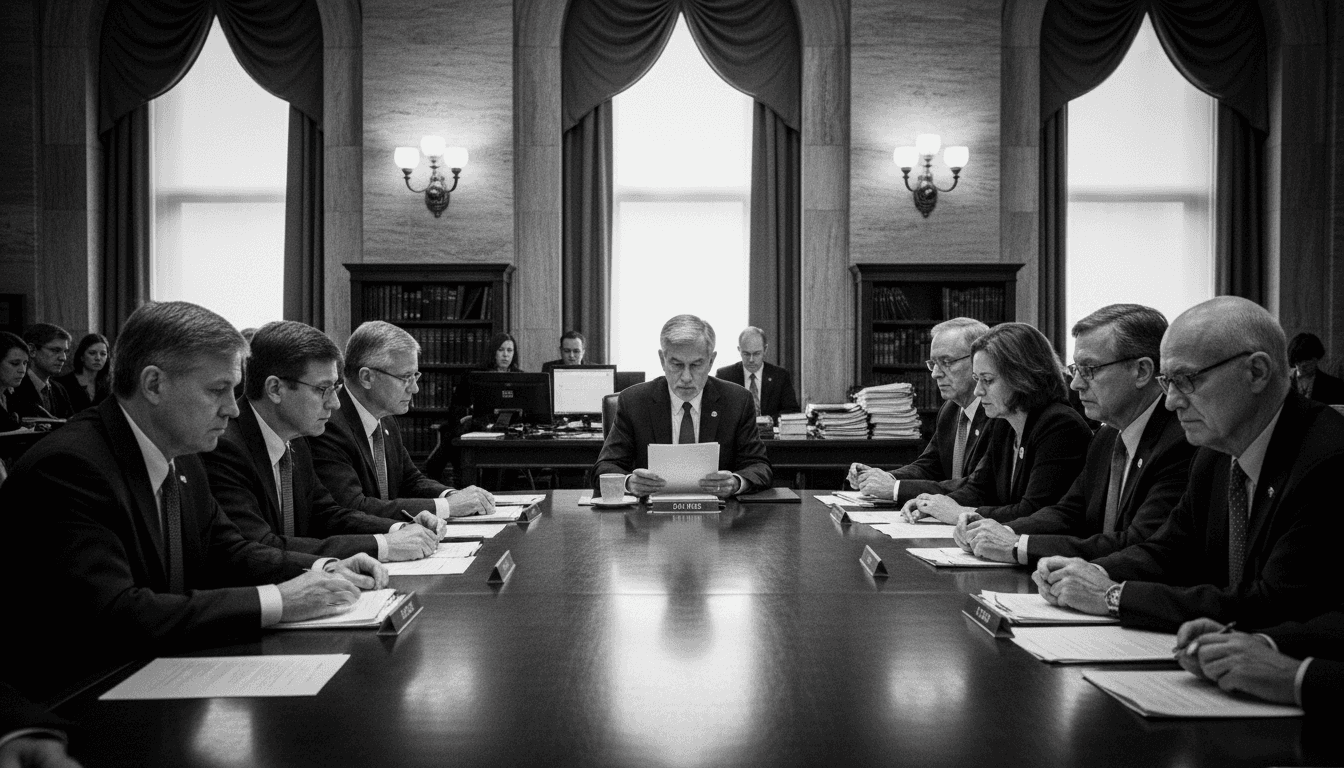
Federal Reserve meetings in early 2026 are unfolding amid legal scrutiny of Chair Powell, presidential pressure to cut rates, and debate over when — or whether — the central bank will ease policy.
• Fed expected to pause after three quarter‑point cuts in 2025 • DOJ subpoenas and Trump pressure raise concerns about Fed independence • Leadership changes and split Fed views make 2026 rate path uncertain
Central‑bank officials and many economists emphasize data‑driven policy and warn that legal or political interference would harm the Fed’s ability to manage inflation and employment. The White House and President Trump argue the Fed should cut rates to spur growth and ease borrowing costs, framing scrutiny of the Fed’s actions as oversight of waste and policy mistakes. Market participants and financial strategists view 2026 as a year of heightened uncertainty — where economic readings, Fed leadership changes, and political developments all shape the odds and timing of any rate cuts.
The Federal Reserve entered its early‑2026 policy meetings expecting to hold short‑term rates steady after three quarter‑point cuts the prior year, while Chair Jerome Powell publicly framed decisions as driven by economics amid a high‑profile Justice Department subpoena tied to his congressional testimony about a Fed renovation project. Powell called the subpoenas a “pretext” and defended the Fed’s independence as officials weighed elevated inflation and a stabilizing job market. [1] At the same time, President Donald Trump has continued to pressure the central bank to lower rates and in an interview denied any involvement in the DOJ action and said the subpoenas were unrelated to monetary policy — a direct contrast with Powell’s framing of the episode. Markets and analysts see political developments, leadership turnover and changing voting membership on the Federal Open Market Committee as key variables for 2026 policy: Bankrate’s analysis notes the prospect of a new Fed chair and a shifted FOMC could either accelerate cuts or leave the Fed cautious if inflation or growth remain strong, and markets currently price a range of possible outcomes for the year. [1][2][3] Longer‑running institutional tensions that emerged in 2025 are expected to carry into 2026: reporting at the start of the year highlighted ideological divisions inside the Fed over tradeoffs between employment and price stability, concerns about presidential influence over appointments, and the risk that political fights could constrain consensus building on policy. Those dynamics — plus economic indicators such as inflation readings and job market strength — will determine if and when rate cuts occur, keeping the timing and magnitude of easing uncertain. [3][4]
Controversy
Powell says DOJ subpoenas and threatened indictment are being used as a ‘pretext’ to pressure the Fed over interest‑rate decisions [1], whereas President Trump denied knowledge of the probe and said the subpoenas had nothing to do with interest rates in an interview aired on NBC [2].