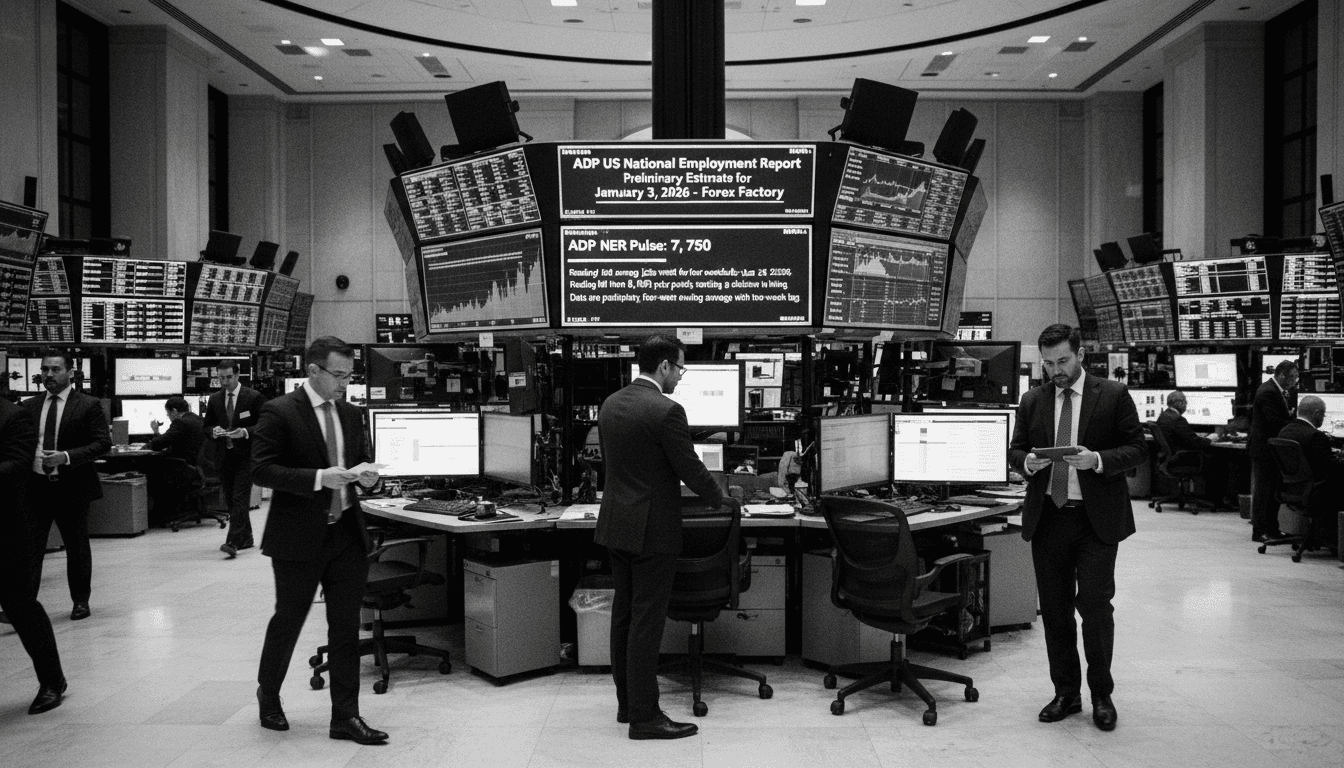
ADP's weekly NER Pulse: U.S. private employers added an average 7,750 jobs/week for the four weeks ending Jan. 3, 2026, signaling slower hiring.
• ADP NER Pulse: 7,750 average jobs/week for four weeks ending Jan 3, 2026 • Reading fell from 8,000 the prior period, marking a slowdown in hiring • Data are preliminary, four-week moving average with a two-week lag
Labor-market caution: Economists and some market commentators view the drop from 8,000 to 7,750 as evidence the labor market is losing momentum and that hiring growth may be cooling. Market reaction: Traders and FX-focused analysts interpret the softer ADP weekly average as contributing to weaker USD performance and a higher probability of earlier Federal Reserve easing. Data‑quality caveat: ADP and reporting outlets emphasize the NER Pulse is a preliminary, high‑frequency estimate (four‑week moving average with a two‑week lag) and can be revised, so some analysts urge caution in extrapolating firm policy conclusions from a single weekly update.
ADP's NER Pulse preliminary estimate for the four weeks ending January 3, 2026, shows U.S. private employers added an average of 7,750 jobs per week, down from 8,000 in the prior period; ADP noted job gains have edged down for a third straight week and that these figures are preliminary and may be revised. [2] TradingView’s summary of the same data highlighted that the reading continues a run of positive four-week averages, describing it as the seventh consecutive period of job growth. [1] StreetInsider likewise reported the 7,750 weekly average and the recent decline from the December readings, and reiterated that the NER Pulse is a four-week moving average based on ADP payrolls. [3] The NER Pulse is produced by ADP Research in collaboration with the Stanford Digital Economy Lab and uses a seasonally adjusted four-week moving average with a two-week lag; ADP publishes the weekly estimate as a near‑real‑time indicator but cautions the numbers are preliminary. [2][3] Market-focused outlets and trading desks flagged potential market effects: some commentary tied the softer weekly average to downside pressure on the U.S. dollar and to rising trader expectations of earlier Fed easing, while also noting the ADP weekly series is used as a directional barometer ahead of the official Bureau of Labor Statistics payrolls. [4] In sum, the four‑week ADP estimate shows private‑sector hiring continuing but losing momentum — positive net additions (7,750/week) alongside steadily smaller weekly gains — and market participants are treating the read as a signal of possible labor‑market cooling even as ADP emphasizes the preliminary nature of the pulse and the potential for revisions. [2][4]