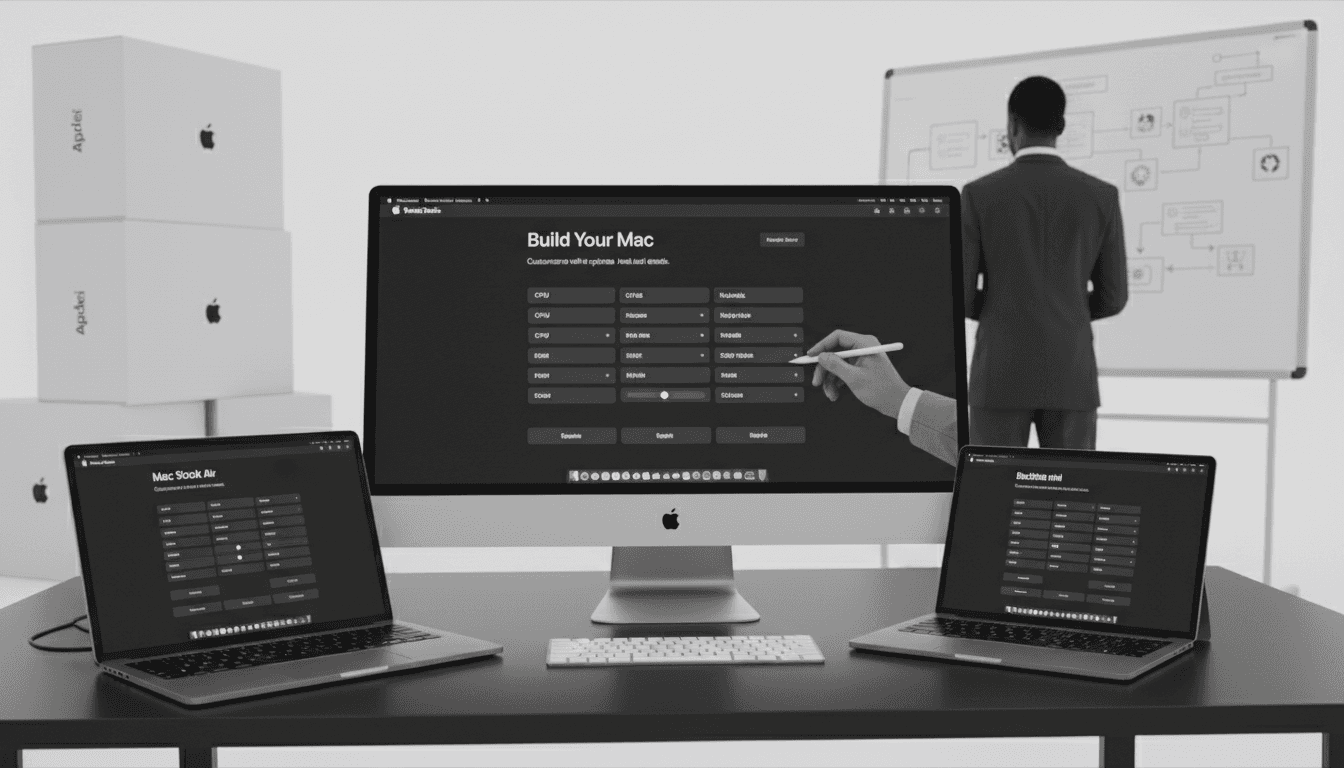
Apple overhauls its online Mac store, removing preconfigured models in favor of an à la carte, build‑to‑order configurator.
• Apple removed preconfigured Mac landing pages; purchase now starts in an à la carte configurator • Change applies across the Mac lineup and mirrors iPhone/iPad buying flows • Move is seen as a step toward build-to-order manufacturing with inventory and sustainability benefits
Apple/Corporate: Sees this as standardizing the online experience and enabling build‑to‑order efficiencies — lowering inventory risk and letting Apple deliver more current components. Consumers: Some will appreciate finer control over specs and potentially better value for exact needs; others may find it harder to compare configurations, encounter configurator hiccups, or be frustrated by longer wait times. Retailers/Partners: Third‑party sellers could continue to offer in‑stock, standard configurations for immediacy, while Apple’s direct channel emphasizes customization; this may shift some sales toward Apple but preserve a role for retailers that prioritize immediate availability.
Apple has quietly reworked its online Mac purchase flow so customers no longer pick from several preconfigured models before customizing; instead, clicking “Buy” now takes users directly into a feature-by-feature configurator where display size, color, screen type, chip, processing power, unified memory, SSD capacity, power adapter, keyboard and optional pro apps or AppleCare are selected individually. This change applies across Apple’s Mac lineup — MacBook Air, MacBook Pro, iMac, Mac mini, Mac Studio and Mac Pro — and was noticed by several outlets and users on forums and Consomac. [1][2][3][4] Analysts and reporters frame the move both as a user‑experience unification (making Mac purchases more like iPhone and iPad flows) and as a potential operational shift toward build‑to‑order manufacturing. Observers say the new process could encourage more upgrades per order and make it easier for Apple to offer finer-grained options (for example, future CPU/GPU core selections with M5 chips), while also reducing inventory risk and waste by producing machines after orders are placed. Commenters and some outlets note tradeoffs: the configurator can make direct price comparisons harder, may initially present incompatible option combinations, and could require Apple to manage customer expectations about lead times. [1][2][3][4][5] Taken together, the reporting suggests this is a deliberate strategic pivot rather than a cosmetic site tweak: it standardizes the online buying experience and aligns with build‑to‑order benefits such as lower inventory carrying costs, fresher components at manufacture time, and sustainability gains — but it also raises short‑term risks around customer confusion, delivery timing, and impacts on third‑party retailers that stock ready‑to‑sell configurations. How smoothly Apple handles configurator logic, pricing transparency, and fulfillment timelines will determine whether the change improves margins and customer satisfaction or simply shifts friction into other parts of the purchase journey. [1][3][5]