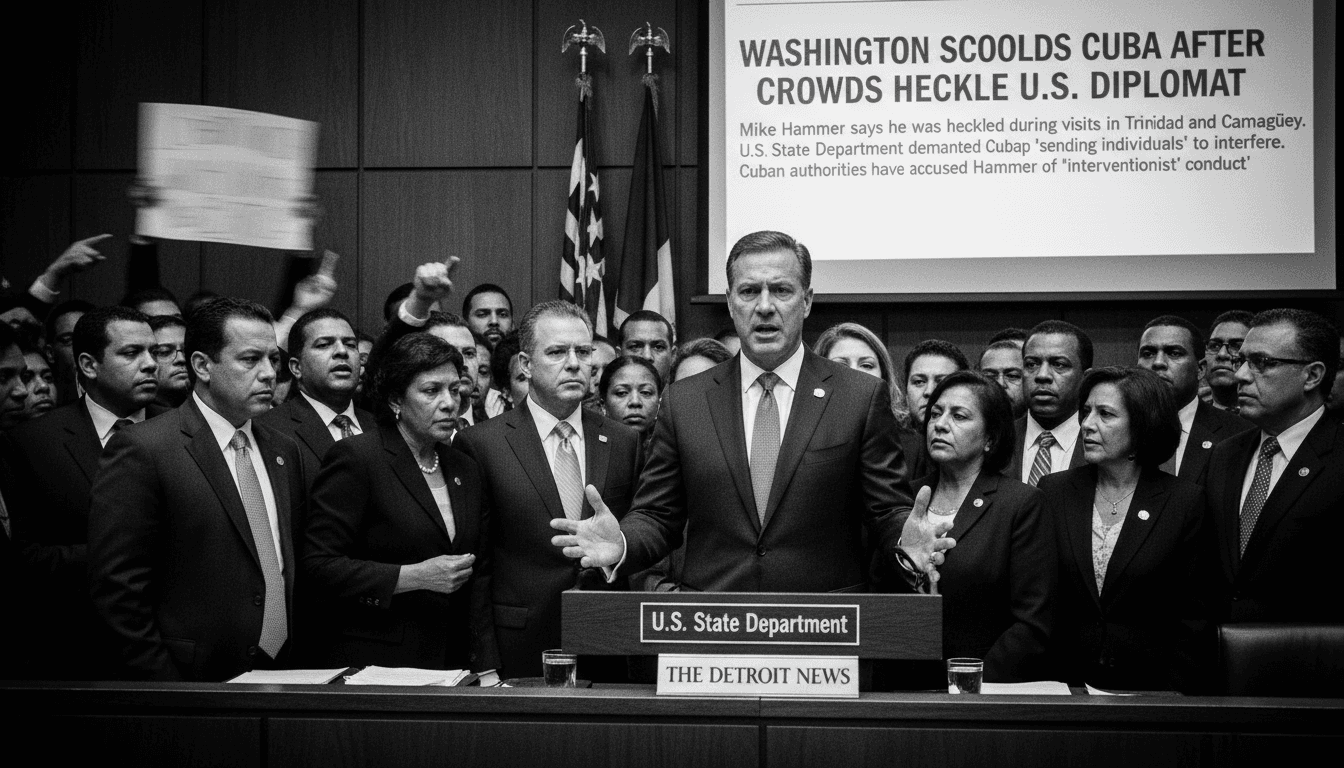
Washington accuses Havana of directing mobs to heckle U.S. chargé d’affaires Mike Hammer during provincial visits.
• Mike Hammer says he was heckled during visits in Trinidad and Camagüey • U.S. State Department demanded Cuba stop 'sending individuals' to interfere • Cuban authorities have accused Hammer of 'interventionist' conduct
U.S. government/diplomatic perspective: Presents the videos and reports of harassment as state-directed intimidation aimed at disrupting legitimate diplomatic engagement and demands that Cuba stop sending people to interfere with embassy work. Cuban government perspective: Views Hammer’s activities as interventionist and accuses the U.S. diplomat of attempting to incite unrest, framing any street confrontations as a consequence of his conduct. Local/independent observers: Videos and social-media footage show small groups heckling Hammer and raise questions about who organized them; some local outlets and witnesses describe the gatherings as mobilized by regime structures, while independent verification of organizers and motives remains limited.
U.S. Charge d’Affaires Mike Hammer reported being insulted and harassed while meeting with church representatives and residents in Trinidad and Camagüey, publishing video of the encounters that local outlets described as “acts of repudiation.” [1][4] The U.S. Bureau of Western Hemisphere Affairs posted on X demanding that Havana “immediately stop its repressive acts of sending individuals to interfere with the diplomatic work” of Hammer and embassy staff, and U.S. lawmakers publicly condemned the incidents. [2][3] Multiple videos circulating online show small groups shouting insults — including words like “murderer” and “imperialist” — at the diplomat during evening power outages; several outlets report that Reuters could not independently identify those in the videos and that the Cuban government has previously accused Hammer of interventionist behavior. [3][4] The episode comes amid heightened bilateral tensions after recent U.S. actions toward Cuba — including a U.S. executive order and tariff threats tied to oil shipments — and amid coverage emphasizing Hammer’s islandwide outreach to dissidents and church leaders since his arrival in late 2024. [2][3][1] Reporting across the sources shows competing narratives: the U.S. treats the episodes as regime-directed interference with diplomacy, while Havana has accused Hammer of fomenting unrest; the core factual dispute over who organized the crowds remains unresolved in the available reporting. [3][4][2]
Controversy
The U.S. asserts that Havana organized or sent individuals to interfere with Charge d’Affaires Hammer’s diplomatic work and called the episodes state-directed intimidation [2][3], while Cuban authorities have accused Hammer of interventionist behavior and fomenting unrest — a directly opposing account of responsibility for the incidents [3][4].