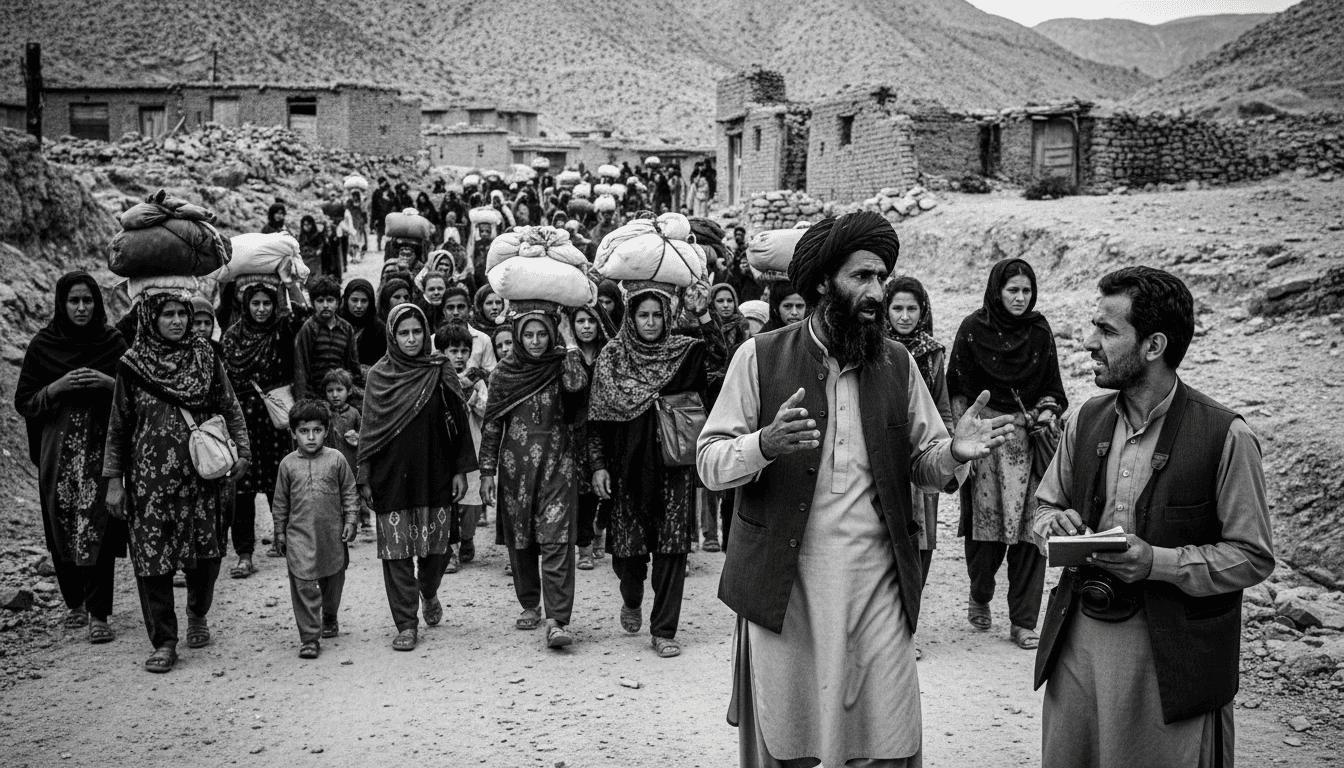
Thousands displaced from Pakistan’s Tirah Valley as federal, provincial and military statements clash over an alleged pre-emptive evacuation.
• Mass displacement from Tirah Valley ahead of planned military action • Registration resumed in Bara; about 7,600 families registered so far • Federal denial of forced 'depopulation' clashes with provincial claims
Federal government / military: Emphasise that operations are targeted, intelligence-based and that there was no directive to depopulate; characterise some reporting as misleading or politically motivated. Provincial PTI leadership and local tribal representatives: Say the operation was imposed without proper consultation, accuse the centre of political motives, and demand withdrawal of evacuation notifications and a grand jirga to defend local rights. Displaced residents, humanitarian observers and independent reporters: Focus on the immediate human cost — chaotic evacuation, weather-related dangers, deaths en route, blocked roads and the urgent need for registration, shelter and supplies.
Thousands of residents of the Tirah Valley in Khyber Pakhtunkhwa have been displaced ahead of a planned military operation, with reports that up to around 80,000 people have left for Peshawar and other areas and many families registering for assistance; registration resumed in Bara with new NADRA centres and authorities reporting roughly 7,600 registered families as of Jan. 24, 2026. [3][4] Aid processing includes biometric verification and distribution arrangements (including SIM issuance) and officials in temporary centres say families are to receive payments (reported at about 250,000 rupees per family for two months' needs), while heavy snowfall, blocked roads and chaotic convoys have amplified humanitarian hardship and at least some deaths have been reported en route. [4][3] The situation has inflamed a political dispute between the federal government, the military and the provincial PTI-led Khyber Pakhtunkhwa administration. KP chief minister’s aides and the CM himself accuse the centre and security institutions of imposing a large-scale operation and of pressuring local jirgas, while the federal information ministry and military spokespeople deny any directive ordering a depopulation and describe movements as voluntary or the result of routine intelligence-led actions; the ministry also pointed to a December notification about contingency funds (reported as Rs4 billion) intended for anticipated voluntary movement. [1][2] Observers place the operation in the context of Tirah’s long history as a militant stronghold and of a sharp rise in violence in 2025, with analysts noting ties between the Tehreek-e-Taliban Pakistan (TTP) and groups across the Afghan border and a large increase in combat-related deaths last year. [3][1] The immediate outlook combines humanitarian urgency with political fallout: relief and registration efforts are continuing amid weather and logistics constraints, while provincial leaders threaten a grand jirga and public protests if the evacuation notification is not withdrawn and apologies issued, and the federal state insists reports of forced depopulation are disinformation. [4][5][2] The competing narratives — operational security needs versus allegations of coercion and political marginalisation — are likely to shape both short-term relief responses and broader debates about military operations, civilian protection and centre–province relations in KP.
Controversy
Provincial officials and KP aides assert the operation and evacuation were imposed by federal authorities and that local jirgas were forced to agree to displacement [1], while the federal information ministry and military spokespeople deny any orders to depopulate the valley and call reports malicious disinformation [2]. Independent reporting also records an army-set evacuation deadline and large-scale departures and humanitarian strain, which some interpret as de facto forced movement despite official denials [3].