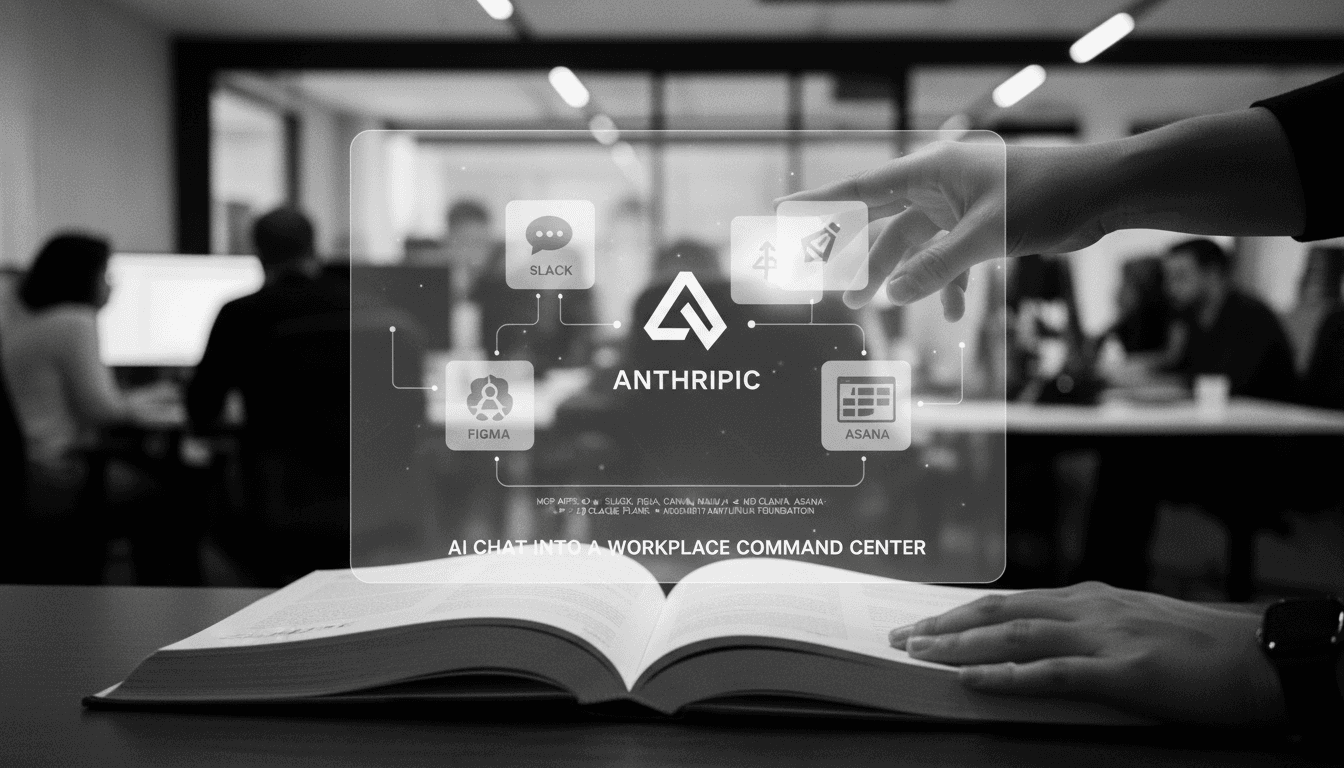
Anthropic extended its MCP protocol so Claude can host interactive apps like Slack, Figma, Canva and Asana directly inside the chat interface.
• Anthropic released MCP Apps to render interactive third-party apps inside Claude chat • Integrations include Slack, Figma, Canva, Asana, Amplitude/Hex, Box, monday.com and more • Feature is available on paid Claude plans; MCP is open and donated to AAIF/Linux Foundation
Anthropic / product perspective: Embedding interactive apps inside Claude reduces friction, makes workflows more efficient, and helps position Claude as a central orchestration layer for enterprise work. Enterprise / IT perspective: Administrators may welcome integrated workflows and bundled pricing but will be cautious about governance, permissioning, and security risks (prompt injections, accidental actions) that require admin controls and review processes. Ecosystem / competitor perspective: Because MCP is open and donated to a foundation, other AI platforms and developers can adopt the same approach — accelerating interoperability — but vendors also risk increased competition and potential lock-in dynamics if enterprises standardize on a single AI orchestration layer.
Anthropic has released an extension to the Model Context Protocol (MCP) called MCP Apps that lets MCP servers surface interactive app-like user interfaces directly inside AI chat products, enabling users to open and manipulate third-party tools inside Claude rather than only receiving text outputs. Early integrations include Asana, Figma, Slack, Canva, Amplitude (Hex), Box, monday.com, Clay and others, while Salesforce tooling is listed as coming soon; Anthropic says the MCP Apps extension is open and can be adopted by other MCP-compatible clients. [1][2][3] The rollout is available in Claude’s web and desktop experiences and, per Anthropic, connectors require a paid Claude plan (Pro, Max, Team, or Enterprise) though Anthropic said it will not charge extra per integration — the company is bundling interactive tools into existing subscription tiers. The firms and press coverage emphasize both practical guardrails (consent prompts for user-initiated actions, admin controls for enterprise deployments, sandboxing and auditable UI messages) and residual security risks such as prompt-injection vulnerabilities; Anthropic and observers frame these as active areas of development rather than solved problems. The MCP extension builds on the open-source MCP work Anthropic donated to the wider Agentic AI / Linux Foundation ecosystem, a move intended to let other products and platforms adopt the same interactive-app pattern. [3][2][1] The announcement signals a strategic shift toward positioning AI assistants as workflow orchestration layers or “everything apps” rather than single-purpose chat tools, a change that could create stronger enterprise lock-in if organizations route daily work through Claude. That potential advantage comes alongside obvious questions: how well UI-driven integrations scale across complex corporate toolchains, which major productivity suites remain unintegrated today (examples cited include Google Workspace and Microsoft 365), and how competitors will respond as this becomes a battleground for embedding AI into core workflows. The open nature of MCP may accelerate ecosystem growth but also transfers some responsibility for safety and governance to integrators and admins. [2][3][1]