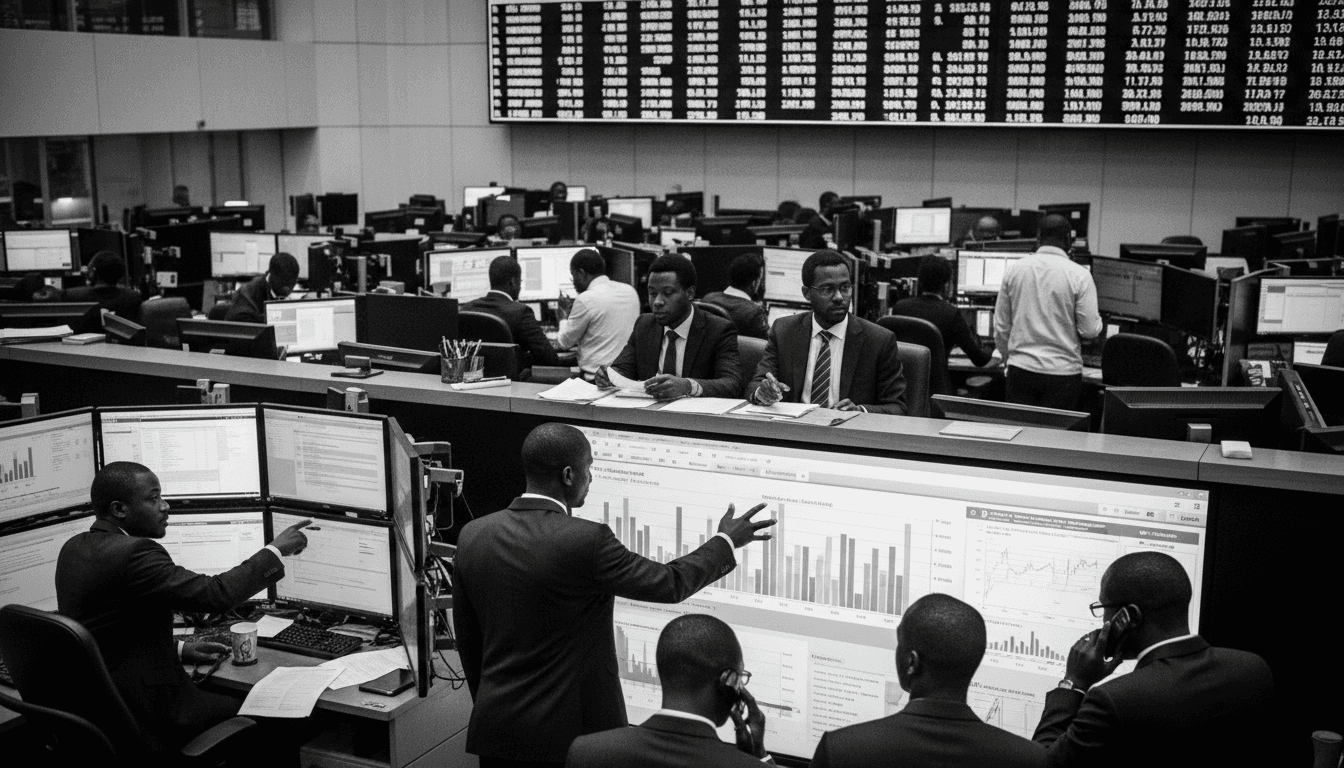
Government increases domestic T-bill issuance as auctions are oversubscribed, signalling strong short-term investor demand.
• Government to raise ~GH¢7.5bn via 91/182/364-day T-bills • January auction oversubscribed: GH¢4.78bn bids; GH¢4.21bn accepted • Investors favor short-term T-bills; long-term yields remain high
Government/treasury: The issuance is presented as a necessary step to meet short-term financing needs and to take advantage of strong domestic demand for government securities. Investors/primary dealers: Institutional investors and banks show a clear preference for short-dated paper to manage liquidity and minimise duration risk, leading to repeated oversubscriptions at T-bill auctions. Analysts/market watchers: While oversubscriptions and lower short-term yields indicate improving confidence, elevated medium- and long-term yields and thin corporate bond activity signal caution about Ghana’s longer-term fiscal and refinancing profile.
The Government of Ghana has moved to raise roughly GH¢7.5 billion from the domestic market via sales of 91-, 182- and 364-day Treasury bills, with a Bank of Ghana notice (BG/FMD/2025/76) setting a GH¢7.56 billion tender target for the next auction. [1] [4] Opening activity in early January showed strong demand: investors submitted GH¢4.78 billion in bids and the Treasury accepted GH¢4.21 billion, exceeding the GH¢3.99 billion target and producing a roughly 19.8% oversubscription — the sixth consecutive oversubscribed T-bill auction. [2] [5] Published yield figures vary by report: some outlets cite average rates of about 11.12% (91-day), 12.55% (182-day) and 12.33% (364-day), while others report yields of 11.11%, 12.55% and 12.93% respectively and provide a tenor-by-tenor bid/acceptance breakdown. [1] [5] Market-level data show why short-term paper dominated trading at the start of 2026. The Ghana Fixed Income Market processed GH¢765.81 million on January 5, with treasury bills accounting for GH¢598.24 million (78.1% of activity) and concentrated demand in short maturities such as a bill maturing March 30, 2026. [3] Analysts and market reports attribute continued oversubscription to investor preference for liquidity, relatively short maturities, and issuance sizes that remain below prevailing market liquidity; corporate bond trading remained largely inactive, reinforcing government instruments’ dominance. [5] [3] Broader indicators — including the fall in headline short-term T-bill rates from crisis peaks and a lower Monetary Policy Rate by end-2025 — provide context for renewed investor confidence, even as medium- and long-term yields stay elevated. [3] The immediate implication is that the government can tap strong domestic demand to meet near-term financing needs, but investor appetite is concentrated in short maturities, and premiums on longer-dated paper underscore ongoing caution about fiscal and refinancing risks. [2] [3] Reported discrepancies in some published yields across outlets highlight the need to consult primary Bank of Ghana auction results for definitive rate figures ahead of the larger GH¢7.56 billion auction. [1] [5]
Controversy
There are minor but notable discrepancies in reported average yields for the 364‑day Treasury bill: some reports state 12.33% while others record 12.93%, and outlets differ slightly on the 91‑day rate as well, suggesting readers should reference the Bank of Ghana auction statement for authoritative figures. [1] [5]