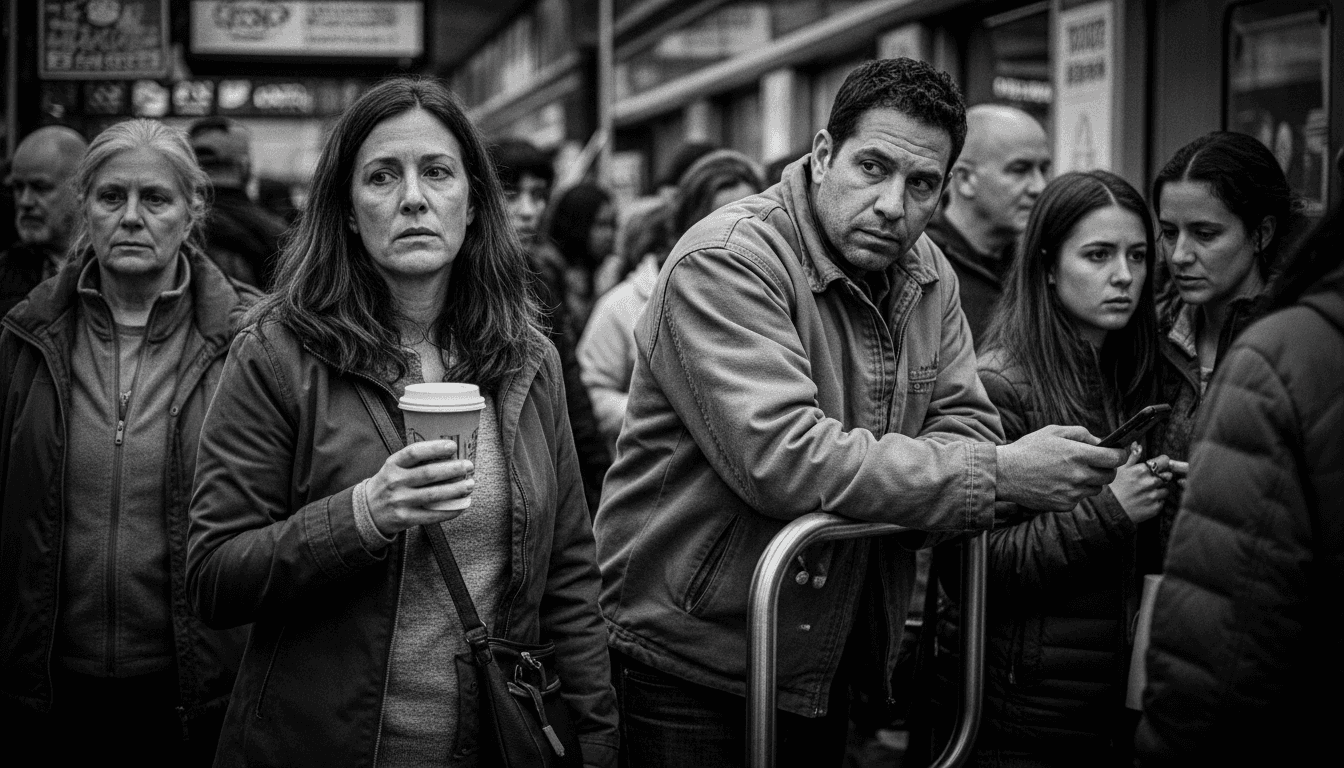
Recent polls show rising public pessimism about personal finances and the U.S. economy despite strong macro data.
• 45% of Americans say their financial security is getting worse. • 57% of respondents believe the U.S. is in a recession. • Gallup finds pessimism for 2026 except majority optimism for stocks.
Household perspective: Many Americans, especially lower‑income families, women, and minority groups, report worsening financial security and see rising prices as a lived reality. Data/market perspective: Official indicators — including recent GDP growth and a strong stock market — show continued macro expansion, benefiting asset owners and painting a more positive overall picture. Political perspective: Voters across parties are increasingly inclined to blame government policy for affordability problems, and broad pessimism about 2026 on social and political dimensions raises political and policy risks.
An exclusive Harris Poll for The Guardian found nearly half of Americans (45%) say their financial security is getting worse while just 20% say it is improving, and 57% believe the U.S. is in a recession; the survey (Dec. 11–13, 2025, n=2,180) also shows a marked shift in who Americans blame for rising prices — majorities of Democrats (76%), independents (72%) and even a slim majority of Republicans (55%) point to government management rather than corporations. [1] Media analysis of the poll highlights a sharp divergence between headline macro indicators — continued GDP growth and a strong stock market — and widespread consumer anxiety about prices, borrowing costs and job security. [2] Separately, Gallup’s year‑ahead polling (Dec. 1–14, 2025) finds Americans expect 2026 to be broadly challenging across 13 dimensions, with only the stock market drawing majority optimism (55% expect it to rise) while majorities foresee rising unemployment, taxes, prices and crime. [3] The pattern in these sources frames a “felt economy” versus “measured economy” gap: wealth and asset holders have benefited from market gains, while many households — especially lower‑income, women, Black and Hispanic respondents — report deteriorating finances and greater pessimism, a dynamic described as a K‑shaped outcome. [1][2] Polling also shows growing bipartisan attribution of responsibility to Washington for affordability problems, even as official indicators show growth; Gallup’s broader questions suggest this pessimism is not limited to pocketbook concerns but extends to political cooperation and international standing, amplifying uncertainty about 2026. [3] The combined evidence points to a politics‑sensitive risk: persistent negative public sentiment about everyday costs and prospects, concentrated among key demographic groups and independents, may shape policy debates and voter behavior regardless of headline GDP or market performance. Reporters should note that the NewsNation URL provided for this task could not be retrieved (access blocked), so this synthesis relies on the Harris/Guardian reporting, Quartz’s coverage of the poll, and Gallup’s polling report.