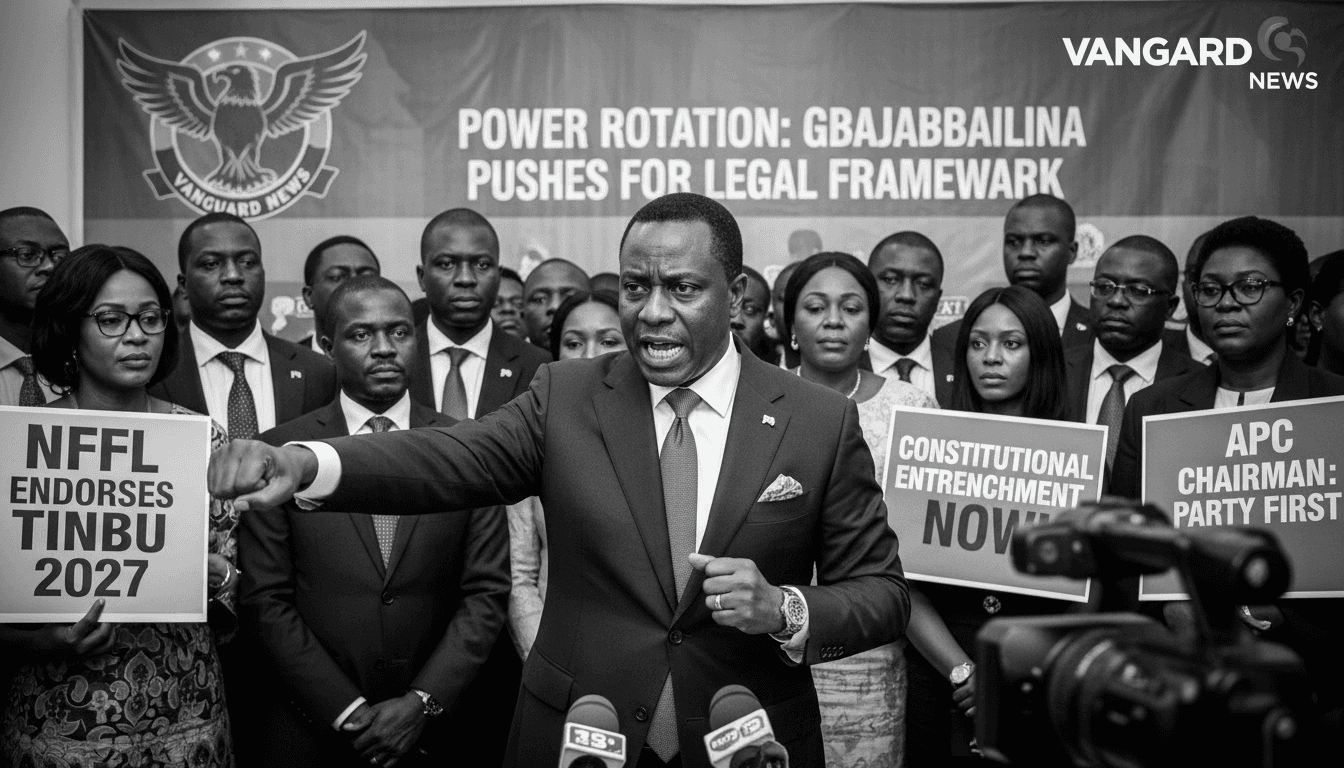
Former lawmakers endorse President Tinubu for 2027 and call to entrench rotational presidency in the Constitution while party leaders signal prioritization of loyalists for 2027 appointments.
• NFFL endorses Tinubu as sole preferred 2027 candidate • Former legislators call for constitutional entrenchment of rotation • APC chairman vows to prioritise party members for 2027 appointments
Proponents (former legislators and some senior figures) argue that constitutionally entrenching power rotation will institutionalise fairness, reduce uncertainty, and promote national unity. Government-aligned voices, including the Chief of Staff, present the push as part of a broader unity agenda and legal clarification intended to manage regional tensions and sustain stability. Opposition or sceptical observers may view constitutionalising rotation and party promises to prioritise loyalists as measures that could limit electoral competition, exclude technocratic appointments, or deepen partisan consolidation ahead of the 2027 elections.
At a National Forum of Former Legislators (NFFL) summit in Abuja, former members of the National Assembly adopted a communiqué endorsing President Bola Ahmed Tinubu as their sole preferred candidate for the 2027 presidential election and called for the rotational presidency to be constitutionally entrenched, including a return of the presidency to the North in 2031; Deputy Senate President Jibrin Barau urged ex-lawmakers to back Tinubu and said he would forward a proposal on rotation to the National Assembly. [1][2] The President’s Chief of Staff, Femi Gbajabiamila, framed these moves within a broader appeal for national unity and described a legal framework for power rotation as a mechanism to manage differences and sustain peace and inclusion; Vanguard reports he called on political actors to preserve the rotational principle as a deliberate device of compromise and stability. [4][2] At the same time, the APC national chairman has signalled an internal party strategy to prioritise party members for political appointments ahead of 2027, indicating the party will reward loyalty and potentially exclude non-party technocrats from key positions. [3] If pursued, constitutionalising rotational presidency would shift an informal power-sharing convention into a legal arrangement—requiring legislative action and generating legal and political debate—and could reduce regional uncertainty while also constraining future electoral choice. The simultaneous public appeals to unity and the party-level pledge to prioritise loyalists suggest competing dynamics: an institutional push to formalise national balance on one hand, and partisan consolidation on the other, both of which will shape the lead-up to the 2027 cycle as the National Assembly and party organs consider next steps. [2][1][3][4]