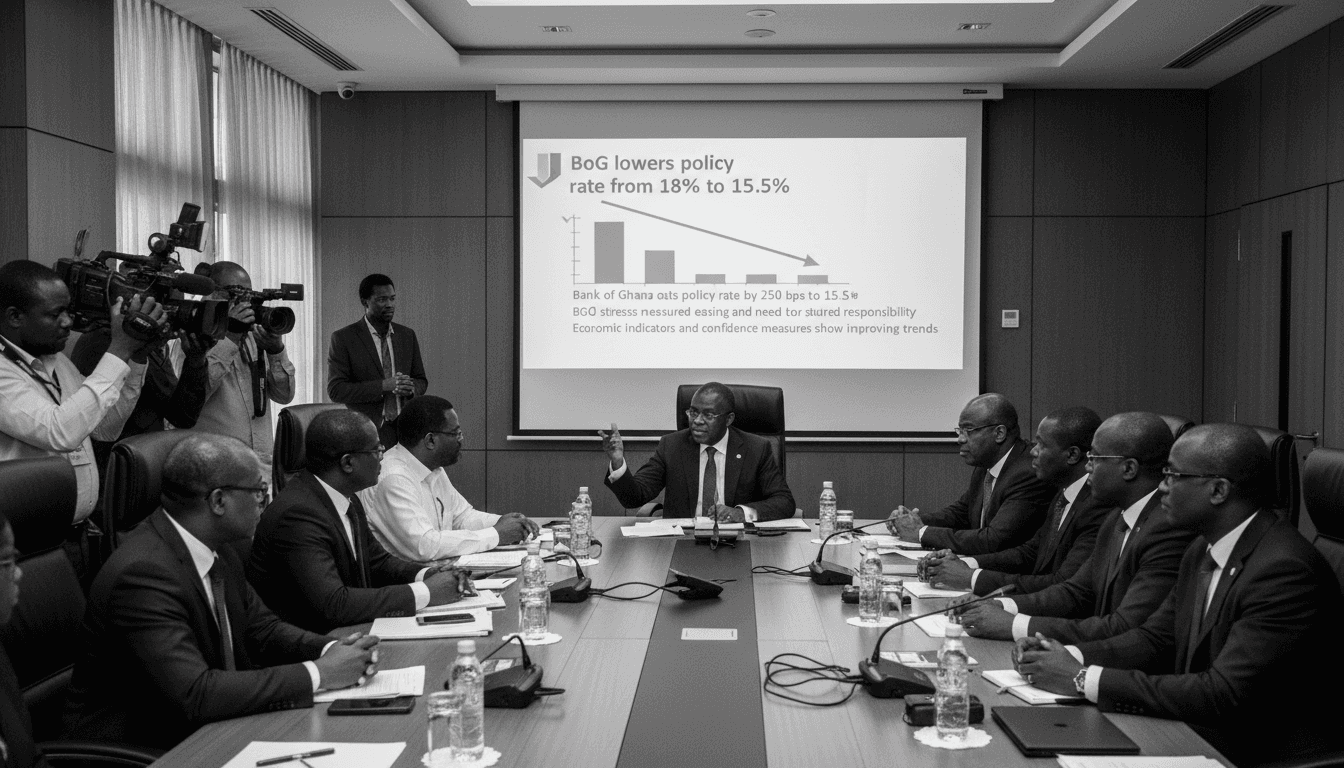
Bank of Ghana lowers its policy rate by 250 basis points to 15.5% as macro indicators improve.
• Bank of Ghana cuts policy rate by 250 bps to 15.5% • BoG stresses measured easing and need for shared responsibility • Economic indicators and confidence measures show improving trends
Central bank: Presents the rate cut as a measured step to support growth now that inflation has eased, while emphasising continued vigilance and the need to consolidate macro gains. Government and reform advocates: Likely to welcome lower borrowing costs as support for economic reset measures, but are called upon by the BoG to share responsibility in fiscal discipline and implementation of reforms. Businesses and consumers: Stand to benefit from prospects of lower borrowing costs and improved confidence, but will watch for transmission of policy cuts into lending rates and any risks from external shocks or utility price adjustments.
The Bank of Ghana (BoG) reduced its policy (monetary) rate by 250 basis points to 15.5%, a move announced at the Monetary Policy Committee decision on January 28, 2026, aimed at supporting growth after marked disinflation. [1][2] BoG Governor Dr. Johnson Asiama and the bank’s communications framed the decision as a measured shift: while inflation has declined and conditions have improved, monetary policy is still being managed carefully to consolidate stability even as it supports recovery. [1][3] Macroeconomic data and sentiment cited alongside the decision point to an improving environment: the Bank’s Composite Index of Economic Activity showed notable improvement (including an 8.8% growth reading in November 2025 versus 1.5% a year earlier), and business and consumer confidence surveys signalled rising optimism driven by easing inflation, a more stable currency and expectations of lower borrowing costs. [4] The central bank has stressed that restoring lasting stability requires coordinated action across institutions and clear public communication, noting reforms in foreign-exchange and money markets and a need for shared responsibility in the government’s economic reset. [3] The decision reflects a transition in BoG policy from aggressive disinflation towards supporting the real economy, but the bank’s public statements underline prudence: officials emphasise consolidation of gains, continued monitoring of inflation dynamics, and the importance of fiscal and policy coordination to sustain the recovery. [1][3][4]