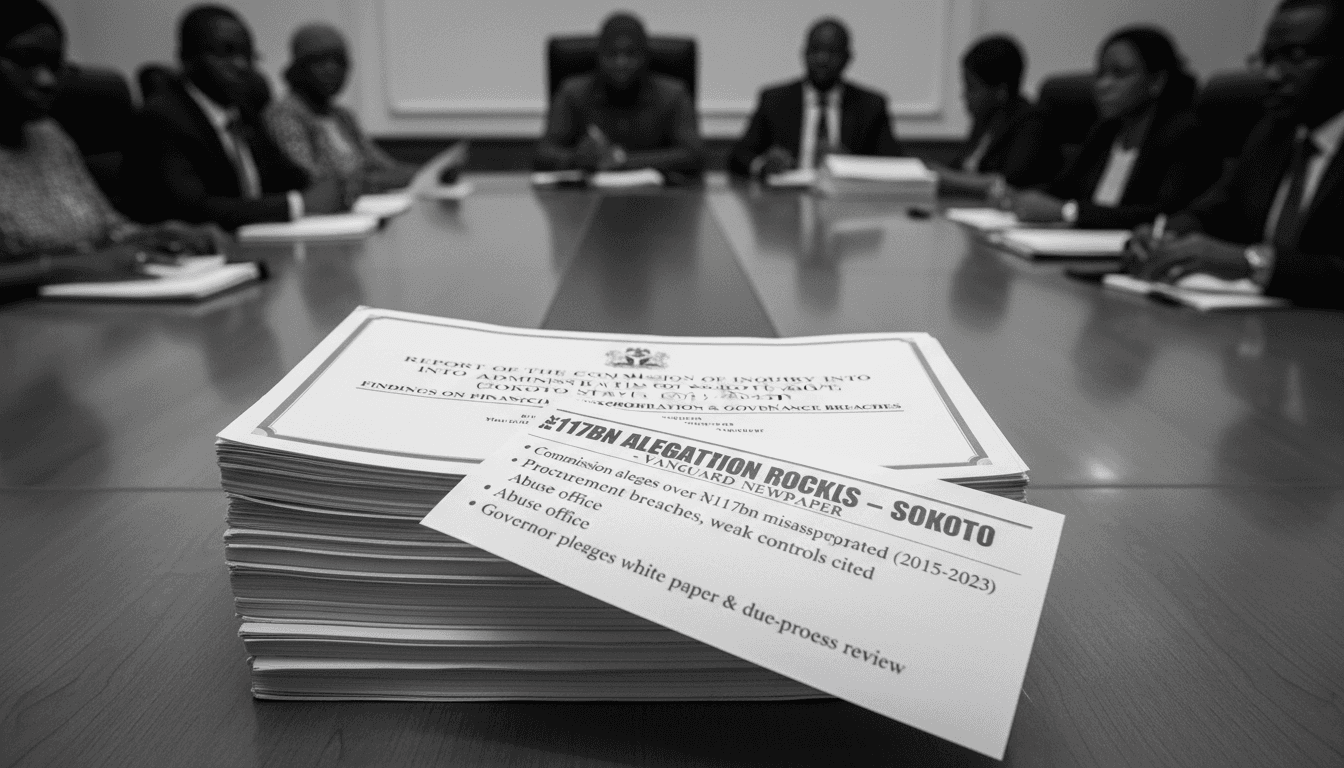
A Sokoto judicial commission alleges over ₦117 billion was misappropriated during former governor Aminu Tambuwal’s eight‑year tenure after submitting its report to Governor Ahmed Aliyu.
• Commission alleges over ₦117bn misappropriated during 2015–2023 • Report cites procurement breaches, weak controls, abuse of office • Governor pledges white paper and due‑process review
Commission/Government: The inquiry team and Governor Ahmed Aliyu present the report as an evidence‑based, constitutional exercise to strengthen accountability and promise a white paper and institutional follow‑up. Former administration/Party: The former governor and the Peoples Democratic Party have yet to provide a detailed public rebuttal at the time of reporting and have indicated they will respond after reviewing the report’s contents. Public/Observers: Civil society, media and the public are likely to frame the report around accountability and rule‑of‑law—calling for transparent follow‑up, while noting that allegations must be substantiated through audits, investigations or legal processes.
A judicial Commission of Inquiry chaired by Justice Mu’azu Abdulkadir Pindiga (rtd) has submitted a report to Sokoto State Governor Ahmed Aliyu alleging widespread financial irregularities totaling more than ₦117 billion during the Aminu Waziri Tambuwal administration (2015–2023). The commission’s findings, presented to the governor, cite non‑compliance with procurement laws, weak financial controls and abuse of executive authority as central causes of the alleged losses; the report is organised into five main sections and was based on documentary reviews and sworn testimony. [2][4][3][1] Governor Aliyu received the report publicly, stressing the exercise was not intended as political vendetta and promising that a committee will prepare a white paper and follow due process in addressing the findings; the commission itself emphasised evidence‑based procedures, noting it received dozens of memoranda and heard scores of witnesses (reported figures include 31 memoranda and 246 witnesses). Media outlets covering the submission echo the core allegations and the state’s stated next steps, and note that responses from the former governor and his party were pending at time of reporting. I was unable to retrieve content from one supplied link (Nigerian Observer) due to access restrictions, but multiple other outlets report the same core findings. [1][2][4][3] The immediate implications are procedural: the state has signalled it will produce a white paper and may refer issues to oversight or anti‑graft bodies, while the accused administration and its party have indicated they will review the report before reacting; until legal or audit processes run their course, the report’s findings remain allegations requiring verification through the promised institutional channels and, where appropriate, formal investigations. Observers will watch whether the state pursues transparent follow‑up (white paper, referrals, and public disclosures) and whether the former administration mounts a substantive rebuttal or legal challenge. [2][4]