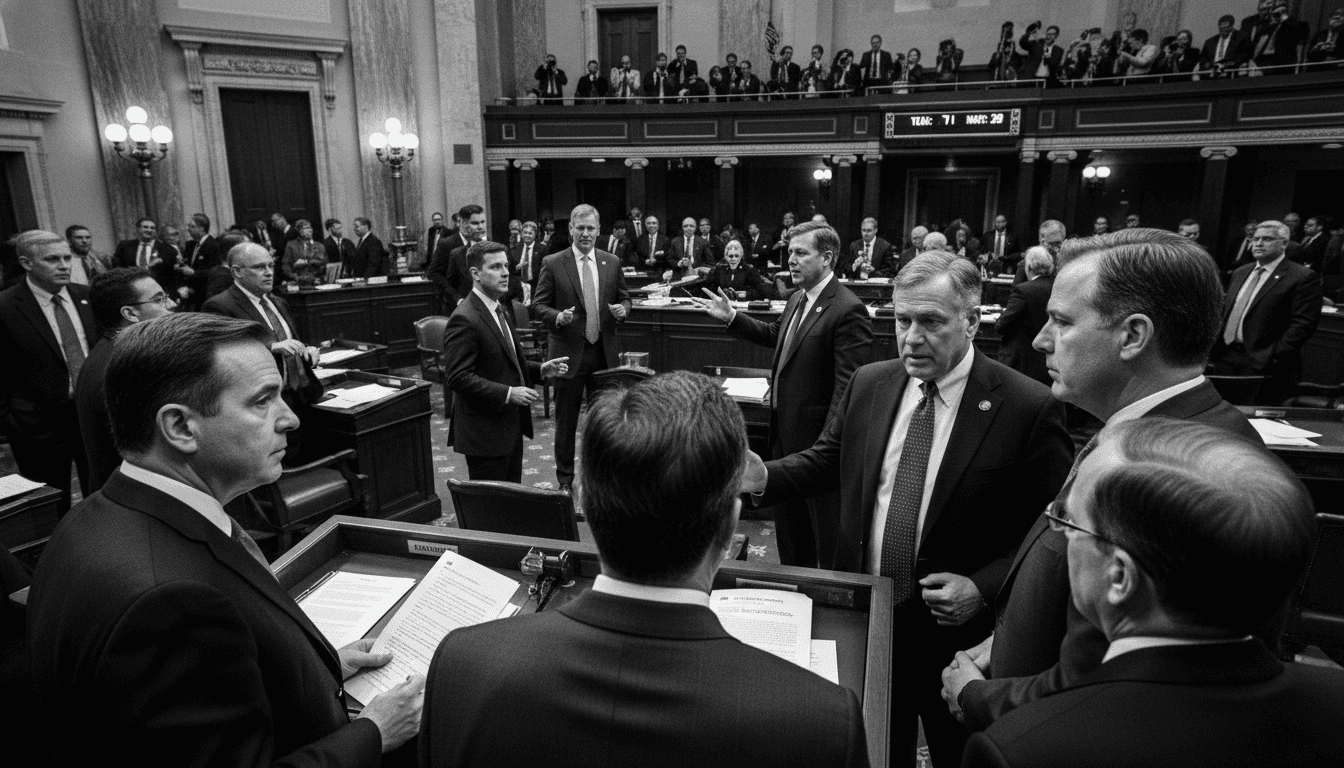
Senate approves spending package while delaying final DHS funding amid demands for ICE reforms
• Senate passed broader spending bill; DHS funding separated for two weeks • Vote was 71-29 in the Senate; bill now goes to the House when it reconvenes • Democrats seek enforceable ICE reforms after two recent deaths involving federal agents
Democratic perspective: Use the temporary carve-out to secure enforceable reforms on ICE and other DHS operations — including body cameras, visible IDs, stricter warrant rules and limits on roving patrols — arguing these are basic accountability measures demanded after fatal incidents. Republican perspective: Resist measures perceived to hinder law enforcement and deportation operations, press for protections for ICE and Border Patrol, and warn that concessions could be politically or operationally harmful; some Republicans also sought parallel policy wins such as sanctuary-city restrictions. Institutional/operational perspective: Congressional timing and procedure matter — the Senate’s move buys time but the House’s return date and appetite for change determine whether funding lapses occur, so short-term disruption remains possible while longer-term policy resolution is uncertain.
The Senate approved a government funding package that would fund most federal agencies through the end of September while carving out Department of Homeland Security (DHS) funding for a two-week period to allow negotiations over restrictions on Immigration and Customs Enforcement (ICE); the measure passed the Senate by a 71-29 vote and now heads to a House that is not due back until Monday, raising the possibility of a temporary partial shutdown over the weekend. [3][2] The agreement emerged after public and congressional outrage over two recent fatalities involving federal agents in Minneapolis, which gave Senate Democrats leverage to press for enforceable reforms — demands that include ending so-called roving patrols, tighter warrant rules, requiring agents to show identification and remove masks, and expanded use of body cameras — while some Republicans warned the changes could impede enforcement and pushed back against perceived concessions; the negotiations were described as an unusual bipartisan engagement between Senate Democrats and President Trump. [3][1][2] Looking ahead, the immediate outlook hinges on whether the Republican-controlled House will accept the Senate’s separation of DHS funding and the proposed timeline for talks; if the House rejects the split package or demands reattachment of DHS funding, lawmakers face renewed brinkmanship and the risk of a longer funding lapse as Democrats continue to use leverage from the Minneapolis incidents to seek policy changes to ICE operations. [3][1][2]