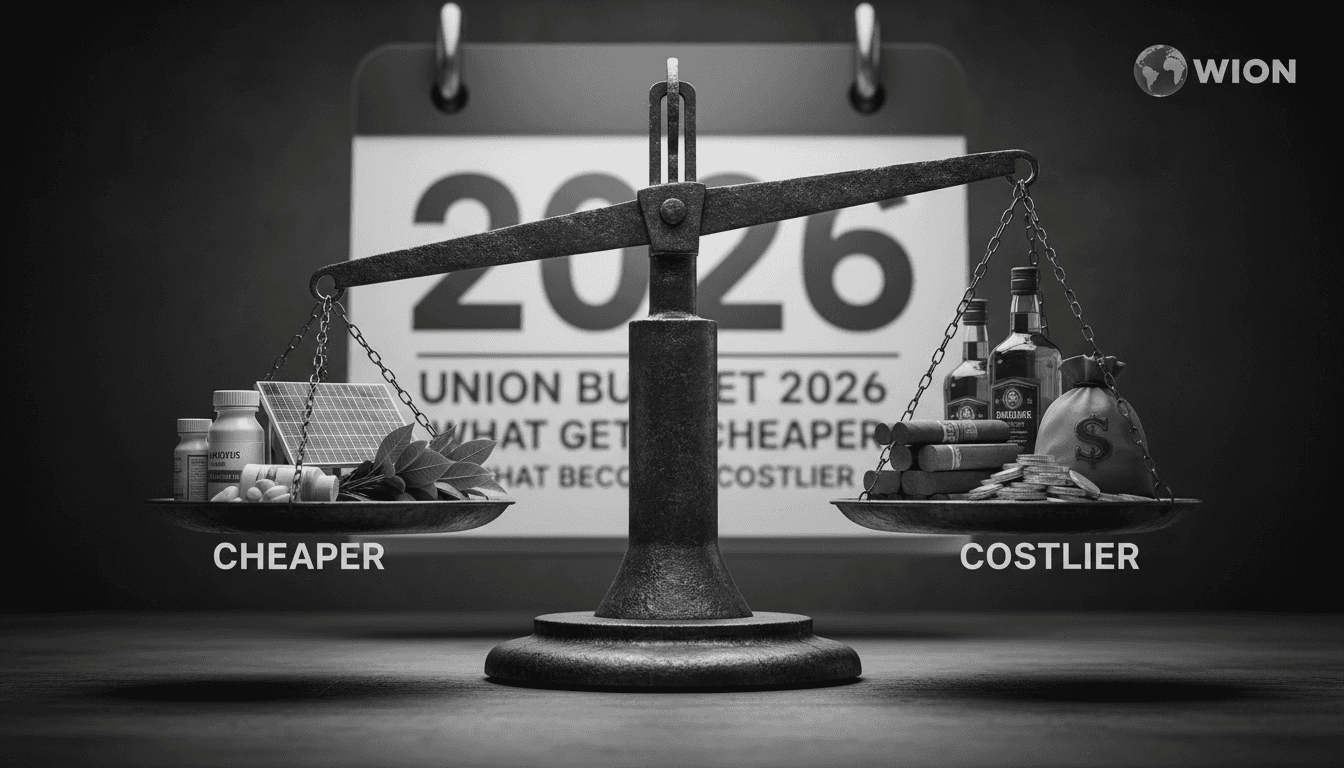
Budget 2026 cuts duties on strategic inputs and medicines to lower costs for exporters and green tech, while raising taxes on sin goods and trading to shore up revenue.
• Customs duty exempted on 17 medicines and key green-tech inputs • Tariff cuts aim to support local manufacturing and hit from US tariffs • Higher levies on alcohol, tobacco and trading to protect revenue
Government: Emphasizes protecting exporters, building strategic supply chains (rare earths, semiconductors, EVs) and insulating the economy from external tariff shocks. Opposition and critics: Argue the budget is cautious and lacks broad redistributive measures, characterizing it as limited in scope for addressing deeper structural or social demands. Markets and analysts: Note the budget’s dual aim — support for industry and fiscal discipline — but warn that tax hikes (eg. on trading) and higher borrowing could pressure markets even as targeted tariff cuts help specific sectors.
India’s Union Budget 2026 announced a mix of targeted customs duty cuts and exemptions and selective tax increases that will make some goods cheaper while raising costs for others: the government exempted basic customs duty on 17 drugs (including some cancer and rare-disease medicines) and on inputs for EV batteries, solar glass, aircraft components and other strategic sectors, and reduced duties on many personal-use imports and overseas-tourism/education remittances; at the same time it raised levies on sin goods and tightened taxes on trading instruments such as futures and options. [1][2][1] The fiscal package is explicitly framed as both industrial policy and external shock management: reporting and expert commentary highlight that tariff relief on capital goods and raw materials aims to boost local manufacturing, reduce dependence on China for critical minerals and energy-transition components (including exemptions on inputs such as sodium antimonate and monazite), and to help exporters hit by recent U.S. tariffs; the budget also increases targeted spending and maintains fiscal discipline, a combination described by some analysts as a defensive “holding operation” to shield the economy from global trade shocks. [3][4] Implications are mixed: consumers and exporters in targeted sectors may see lower input or retail costs (medicines, EV/solar inputs, aircraft parts, personal imports), while higher duties and removed exemptions will raise prices for specific items (imported alcohol, tobacco products, certain machines and luxury items) and increase compliance costs for traders — a trade-off the government appears to accept to support strategic manufacturing, protect jobs in export clusters and preserve revenue. [1][3][4]