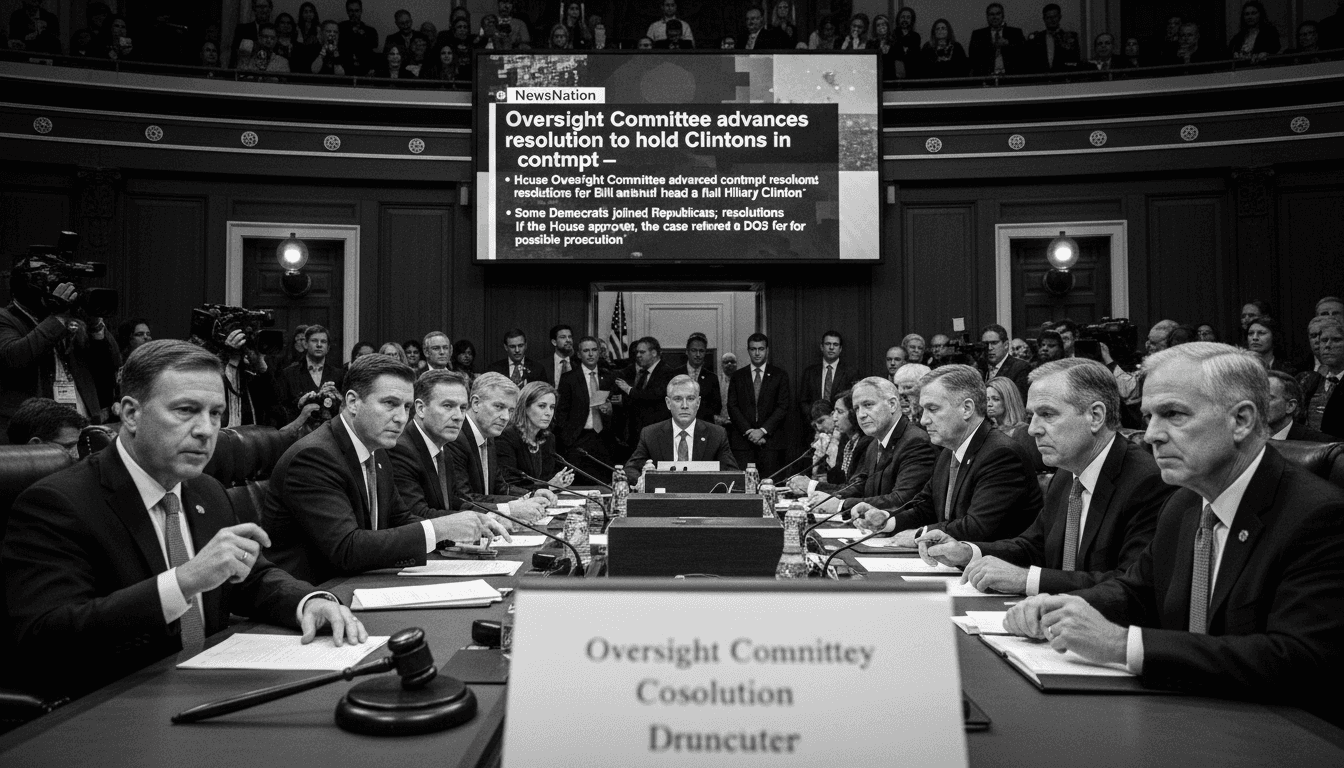
House Oversight Committee advances resolutions to hold Bill and Hillary Clinton in contempt over subpoenas tied to the Jeffrey Epstein investigation.
• House Oversight Committee advanced contempt resolutions for Bill and Hillary Clinton • Some Democrats joined Republicans; resolutions now head to a full House vote • If the House approves, the case would be referred to DOJ for possible prosecution
Republican oversight view: Chairman Comer and GOP members say subpoenas are legally enforceable and must be obeyed to preserve congressional investigatory power. Democratic and Clinton view: Some Democrats criticized singling out the Clintons while DOJ delays releasing Epstein files; the Clintons say the subpoenas lack legal merit and have offered written statements and limited accommodations instead of the requested transcribed depositions. Legal/neutral observers: Legal experts note contempt referrals are rare against former presidents, emphasize the Justice Department’s discretion over prosecution, and warn the matter could become both a legal test and a partisan flashpoint.
The House Oversight Committee voted on Jan. 21, 2026 to advance resolutions recommending that former President Bill Clinton and former Secretary of State Hillary Clinton be held in contempt of Congress for refusing to comply with subpoenas tied to the Jeffrey Epstein investigation; the measures were advanced to the full House and carried bipartisan support with some Democrats joining Republicans. [2][5][3] Committee Chair James Comer framed the action as enforcement of congressional subpoenas, saying subpoenas “carry the force of law” and arguing the Clintons must appear for transcribed depositions, while the Clintons have called the subpoenas legally invalid and said they have offered sworn statements and other limited cooperation. Democrats on the committee criticized the focus on the Clintons while pressing for full release of Justice Department Epstein files and sought, unsuccessfully, to hold former Florida Attorney General Pam Bondi in contempt for not producing related documents. The committee’s move sets up a likely House floor vote in the coming days or weeks and would, if approved, direct the Speaker to refer the matter to the U.S. Attorney for the District of Columbia for possible criminal prosecution — a step that would put final charging decisions in the hands of the Department of Justice. [2][5][4] Observers note the practical and legal hurdles ahead: contempt referrals against high-profile former officials are rare, enforcement would depend on the Justice Department, and the political dynamics in the full House could affect the outcome and the longer-term impact on the Epstein inquiry. The votes reflect both growing congressional impatience over delays in releasing Epstein-related files and the partisan tensions that will shape whether the contempt resolutions lead to prosecution or remain a primarily political escalation. [5][3][2]