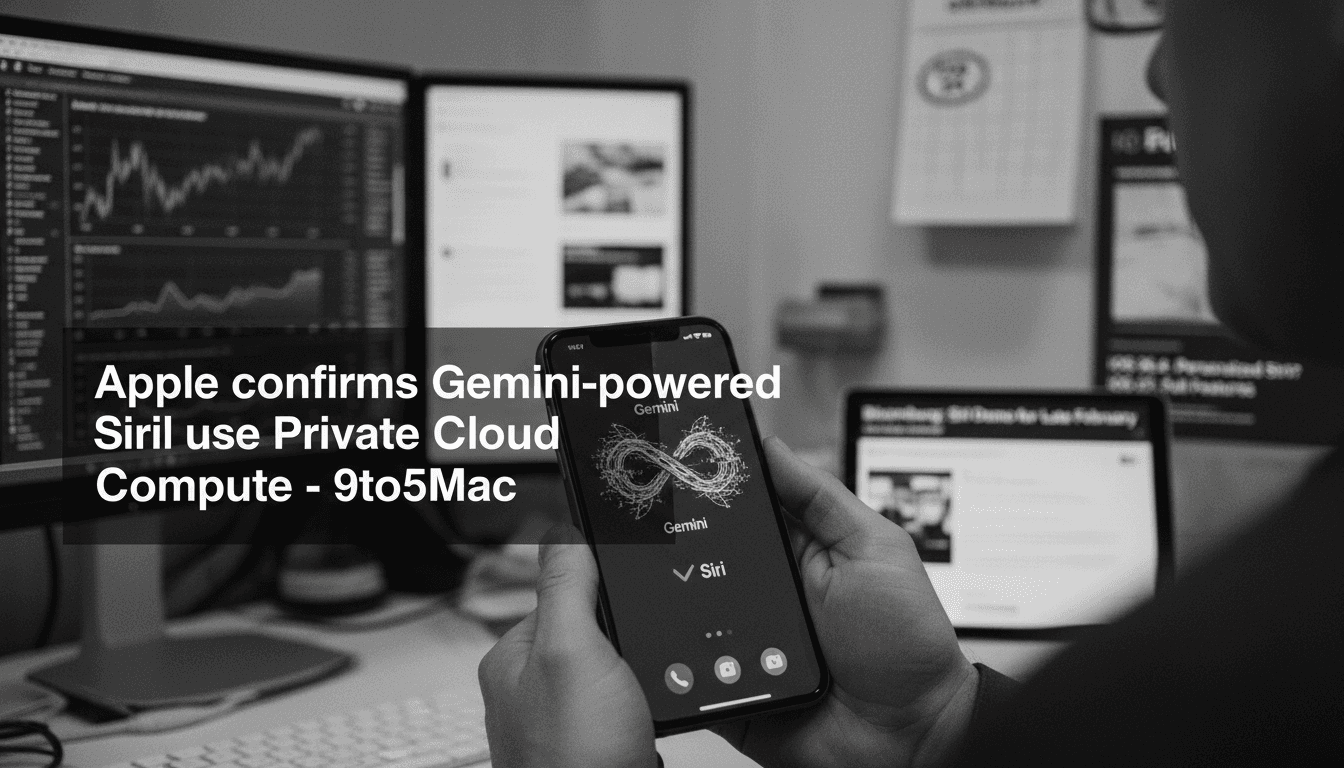
Apple plans a February demo of a Gemini-powered, privacy-focused Siri that will run on-device and in Private Cloud Compute.
• Apple says Gemini-powered Siri will run on-device and in Private Cloud Compute • Bloomberg reports a demo planned for the second half of February • iOS 26.4 may introduce personalized Siri, with fuller features in iOS 27
Apple leadership: Emphasizes collaboration with Google while insisting existing privacy rules and architecture (on-device plus Private Cloud Compute) will remain unchanged. Privacy advocates and regulators: Likely to scrutinize how Gemini models are integrated, how data flows between devices and Private Cloud Compute, and whether Apple’s privacy assurances hold in practice. Developers and users: Anticipate more capable, conversational Siri features but face staged availability, potential delays for some functionality, and questions about when full chatbot-like behavior will arrive.
Apple executives confirmed that the next-generation, Gemini-powered Siri will operate both on-device and in Apple’s Private Cloud Compute as part of a collaboration with Google, and said Apple will maintain its existing privacy architecture while pursuing the partnership. CEO Tim Cook framed the effort as a collaboration and reiterated that Apple Intelligence features will run on device and in Private Cloud Compute, with few details released about contract terms or rollout percentages. [1][4] Reporting based on Bloomberg indicates Apple intends to show demonstrations of the revamped Siri in “the second half of February,” with Gemini-powered features entering iOS 26.4 beta testing in February and a broader public rollout likely in March or April; Apple has planned a fuller reveal of the project at WWDC and a more chatbot-like Siri expected across future OS versions. MacRumors outlines that iOS 26.4 is expected to introduce a more personalized Siri with deeper per-app context and that some functionality could be deferred to iOS 27, reflecting a staged rollout that follows a lengthy delay since WWDC 2024. [2][3] Taken together, the coverage shows Apple trying to balance delivering more advanced generative-AI capabilities while publicly committing to its privacy model; details remain scarce, including exact technical integration, contractual terms with Google, and precise user availability. Expect a phased introduction (demo, beta, public release, then broader OS-level integration) and continued scrutiny from privacy advocates and developers as Apple provides more implementation specifics. [1][2][4]